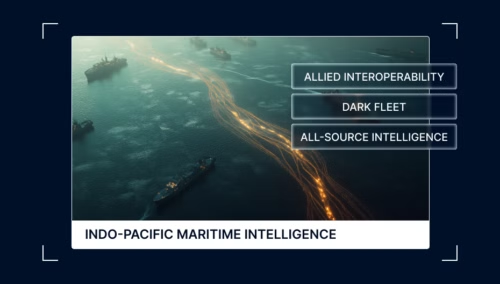
Maritime Domain Action in the Indo-Pacific Needs One Shared All-Source Picture
At a Glance Information Advantage Starts With a Picture Allies Can Share Talk of information advantage and allied interoperability comes down to one practical question: Can partners act together on a trusted picture of what is moving at sea, and why? Most do not, at least not yet. Each navy, coast guard, and agency holds…
Read more
From Dark Voyages to Defensible Claims: How Marine Insurers Are Closing the Evidence Gap
At a Glance Claims Teams Are Now Reconstructing, Not Just Investigating Claims teams in marine insurance own two things: the loss investigation and the pay-or-reject decision. In the pre-2022 environment, both were largely a matter of establishing what happened, verifying that the loss fell within the policy’s coverage, and processing accordingly. AIS records, cargo documentation,…
Read more
Trade Data vs. Maritime Intelligence: What Customs Agencies Actually Need
At a Glance Trade Data Was Built for Commercial Visibility Cargo manifests, customs declarations, shipping records, and import and export filings exist to describe commerce. They do that well. How much crude moved through Yanbu last month? Which companies are shipping dry bulk into Rotterdam? What do the dominant trade flows look like across the…
Read more
Undersea Cable Security in the Indo-Pacific Starts With Vessel Behavior
At a Glance Undersea Cable Security in the Pacific Runs Through Hawaii and Guam Undersea cable security in the Indo-Pacific comes down to a handful of islands. Hawaii and Guam anchor the trans-Pacific links that connect the continental U.S. to its forces, allies, and partners across the theater. Honolulu itself sits on that infrastructure. The…
Read more