


August 19, 2026
A Fatal Strike and the First Seizure Since June as Iran's Transit Rules Take Effect


U.S. and Iran Agree to End Hormuz Conflict: Reopening Begins, But Not in a Rush

What’s inside?
At a Glance
- The U.S. and Iran have agreed to end the conflict in the Strait of Hormuz, with the agreement set to be signed on Friday and Iran reporting a 60-day toll-free transit window.
- The U.S. blockade on Iranian ports remains in force until the Friday signing.
- 36 hours after the agreement, few stranded ships have sailed, directly contrasting the April 18 reopening, when more than 50 ships attempted AIS-visible transits within 24 hours and at least 33 U-turned mid-way.
- About 550 cargo vessels and tankers were broadcasting AIS positions west of Hormuz as of June 14, with tankers already repositioning closer to the strait.
- Windward tracked 151 Hormuz transits between June 1 and June 15, compared with 156 transits across all of May, with 18% of June transits dark and daily transits averaging seven ships.
- The International Maritime Organization is working with at least 15 countries to establish a safe corridor for an estimated 20,000 stranded seafarers, although security and safety guarantees are not yet in place.
- War risk premiums to enter the Listed Area are reported as high as 10% of hull value, up from the 2 to 5% range earlier in the conflict.
Operational Overview
The Strait of Hormuz is reopening, but cautiously. Thirty-six hours after the U.S. and Iran agreed to end the conflict in the strait, stranded ships have started their engines, but few have sailed. The contrast with the brief mid-April false start is shaping shipowner behavior this time.
The agreement is set to be signed on Friday, with the U.S. blockade on Iranian ports remaining in force until then. The structural pieces of a reopening, including a 60-day toll-free transit window, two active corridors, and IMO coordination on a safe corridor for stranded seafarers, are largely in place. What is not yet in place is commercial confidence.
Windward assesses that the gating factors on a full restart are the speed of minesweeping operations, the trajectory of war risk premiums, the willingness of lower-risk-appetite shipowners to follow first movers, and the status of Iran’s immobilized shadow fleet. Resumption of traffic to normal levels will be measured in weeks, not days.
The Agreement and What Is Still in Force
The U.S. and Iran have agreed to end the conflict in the Strait of Hormuz. The agreement is set to be signed on Friday, and the U.S. blockade on Iranian ports remains in force until the signing. According to Iranian reporting, the deal includes a 60-day toll-free transit window through the strait.
The blockade has sequestered Iranian-trading tankers west of Hormuz, in the Gulf of Oman, and at ports east of Hormuz. The complete restoration of freedom of navigation will be crucial for traffic to return to pre-war levels.
The International Maritime Organization said on June 15 that it was working with at least 15 countries to establish a safe corridor for an estimated 20,000 stranded seafarers. Security and safety guarantees are not yet in place.
A Cautious First 36 Hours
Stranded ships have started their engines, but 36 hours after the agreement, few have sailed. About 550 cargo vessels and tankers were broadcasting AIS positions west of Hormuz as of June 14, including 86 product tankers, 34 crude tankers, 23 chemical tankers, 80 bulk carriers, 33 containerships, and 15 LNG carriers.
Preparations to leave are already visible. Vessels are sailing to positions closer to the strait and waiting at anchor for clearance. Many have switched off their AIS, as permitted for safety and security reasons, adding to the opacity and uncertainty in the operating picture.

The absence of a sailing rush reflects a lack of confidence rather than a lack of capability. The resumption of traffic to normal levels will be measured in weeks, not days.
The April 18 Precedent
The current restraint contrasts directly with the false start on April 18. Within 24 hours of the last reopening announcement by Iran’s foreign minister on April 17, more than 50 ships attempted AIS-visible transits through the strait. At least 33 of them U-turned mid-way after the IRGC declared the strait closed and attacked two ships.

A more cautious approach is expected this time, with the April reversal still shaping risk appetites across the broader market.
What Is Already Moving
Despite the visible caution, traffic is not at zero. Windward tracked 151 Hormuz transits between June 1 and June 15, against 156 transits across the whole of May, indicating that the pace was already accelerating ahead of the agreement. Daily transits averaged seven ships in the first two weeks of June and rose to 12 transits on June 15 alone.
18% of the June 1 to 15 transits were dark. The actual proportion may be higher, given the limits of satellite imagery coverage. Dark transits observed at 09:00 on June 15 included one outbound LPG carrier, one outbound tanker, and one inbound bulk carrier.
The Two Active Corridors
Until the Traffic Separation Scheme, which has been in use since 1968, is cleared by minesweeping operations, transits will be made through one of two corridors.
The northern corridor runs through Iranian waters and is controlled by the IRGC on a permission basis. The southern corridor runs through Omani waters, and the U.S. government is already providing military guidance and support along that route.
The pace and scale of any Hormuz exodus depend on three factors:
- The shipowners and charterers’ risk appetite, which varies by vessel ownership, cargo, and destination.
- How quickly minesweeping operations can begin to clear the Traffic Separation Scheme.
- Commercial shipping industry confidence in the Iran-U.S. and allied guarantee of safe passage.
What to Watch
The first phase of the reopening will be shaped by several distinct patterns of behavior across ownership, cargo, route, and risk.
Ownership
Greece-owned bulk carriers and tankers comprised the majority of transits undertaken during the Hormuz closure. The Greek-owned cohort moved via the permission-based, Iranian-controlled northern corridor. Others transited dark through the southern corridor in Omani waters.
Destination and Cargo
Stranded energy commodities cargoes, including LNG, LPG, and crude oil destined for Pakistan, India, and China, are likely to ramp up first. These cargoes already comprised the majority of AIS-visible transits during the closure, undertaken with agreements already in place with Iran, and are the cargoes most likely to seek and secure safe-passage guarantees first.
UAE, Kuwait, and Iraq Oil Shuttles
A cohort of some 15 to 20 tankers is already shuttling oil to and from the Gulf of Oman and Fujairah for ship-to-ship transfer to tankers heading to onward Asian destinations. Oil loaded from terminals west of Hormuz is moved with AIS switched off. About half of this oil originates from UAE ports. These transits are conducted with U.S. support and guidance via the southern corridor through Omani waters.
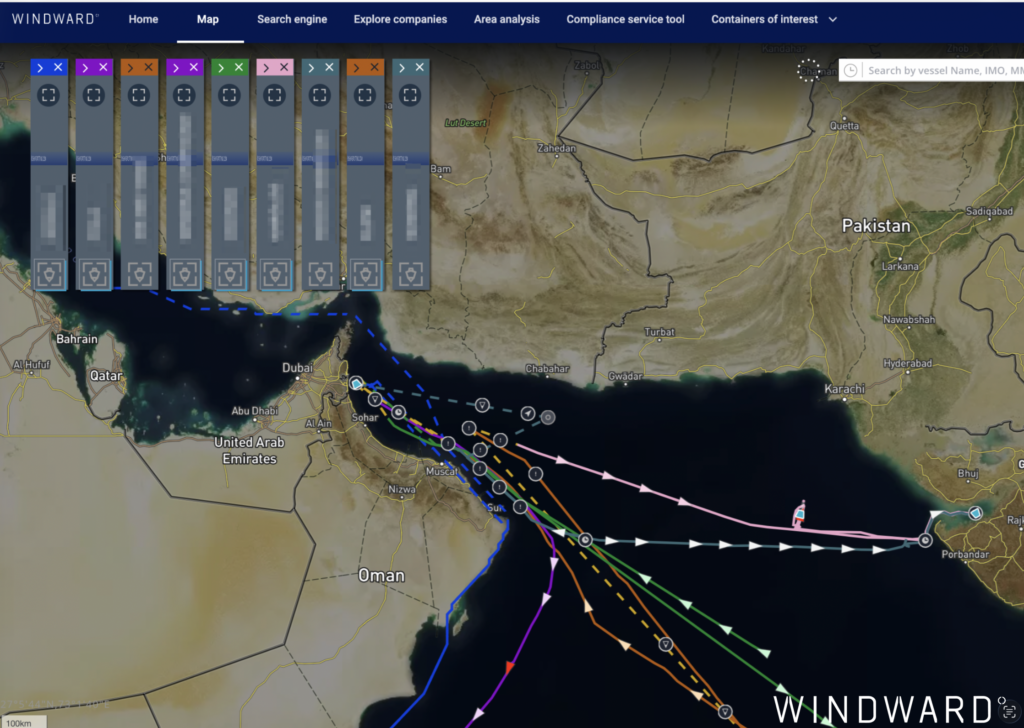
At least two Kuwaiti VLCCs were observed making inbound transits last week while dark. The current pace of approximately 2.5 million barrels per day can scale rapidly because the tankers are already deployed and the route is established. Additional VLCCs are positioned outside Hormuz in the Gulf of Oman, waiting for inbound transit clearance. This pathway can be quickly scaled to boost exports once confidence returns.
Risk Appetite
Risk appetite varies by shipowner and charterer, with vessel ownership, cargo, and destination all factoring into the decision to sail. Lower-risk appetite shipowners will await clarity and assurances, or the establishment of a safe corridor, and watch first movers before committing. Those shipowners are likely affiliated with Japan and South Korea, and with China and major Western oil traders.
Marine Insurance
Shipbroker reports indicate that additional premiums for war risk to enter the Listed Area have been quoted as high as 10% of hull value. Rates were earlier reported in the 2 to 5% range. Premiums are expected to ease as maritime security improves. Inbound transits will be key to a successful reopening, since the commercial shipping industry needs confidence to return to loading cargoes after the stranded ships have left.
The Shadow Fleet Wildcard
Iran’s shadow fleet of more than 200 tankers, many of them subject to U.S. sanctions, remains immobilized by the blockade on Iranian ports. The status of those vessels is a significant wildcard in any broader settlement. The open question is whether Iran will exchange the restoration of freedom of navigation through Hormuz for the removal of sanctions on its fleet.
Outlook
The Strait of Hormuz is reopening, but slowly. The agreement is real, and the structure is in place, including the Friday signing, the 60-day toll-free window, the two active corridors, and IMO coordination on a safe corridor for stranded seafarers. What is not yet in place is commercial confidence.
The April 18 precedent is shaping shipowner caution. Insurance markets are pricing in elevated risk. The Traffic Separation Scheme has not yet been swept. The question of Iran’s immobilized shadow fleet remains an unresolved component of any broader settlement.
The next phase of the reopening will likely be led by energy cargoes destined for Pakistan, India, and China, by the Greek-owned cohort that moved during the closure, and by the UAE, Kuwait, and Iraq shuttle tankers already positioned outside Hormuz. Higher-risk-appetite operators will move first. Lower-risk-appetite owners will watch and wait.
Explore more

A Fatal Strike and the First Seizure Since June as Iran’s Transit Rules Take Effect
At a Glance A Chief Engineer Killed Aboard a Bulk Carrier Exiting Hormuz MINOAN DIGNITY (IMO 9294484), a Liberia-flagged bulk carrier of 225 meters and 76,801 DWT, was struck by an unknown projectile in its engine room while transiting outbound through the Strait of Hormuz southern corridor overnight on August 17 to 18. The vessel’s...
Read more

A Second ADNOC Strike in a Week as Koh-e-Mubarak Hardens Into an Evasion Hub
At a Glance Two ADNOC Tankers Strcuk by Iranian UAVs The UAE Ministry of Foreign Affairs condemned what it described as a hostile Iranian attack on two ADNOC-affiliated vessels struck by UAVs while transiting the Strait of Hormuz on August 14, with no injuries reported. The UAE called it a violation of UN Security Council...
Read more

Kharg’s Western Terminal Reactivates as the Caspian Corridor Structurally Expands
At a Glance Competing Claims on Hormuz Control President Trump stated the U.S. has total control of the Strait via its naval blockade. Iran says it still controls the waterway, plans a toll system, and will not reopen it until its conditions are met. The competing claims reflect an increasingly hardened diplomatic posture on both...
Read more

Three Kinetic Incidents in One Window as the Iran-Oman Corridor Expands
At a Glance Operational Overview Three kinetic incidents in a single window have hit three different theaters simultaneously. TIHAMAH was struck and grounded near Perim Island off Al Mokha, killing three crew, the first fatalities from a Houthi attack on a vessel in Yemeni waters this escalation round. The UAE confirmed Iran struck an ADNOC...
Read more

Kharg Is at a Standstill, and a Russian Shadow Fleet Convoy Runs the Arctic
At a Glance Overview Both sanctioned export pipelines are under their most acute enforcement pressure since the conflict began. On the Iranian side, Kharg Island’s crude export pipeline has been at a complete standstill since July 31, with all three terminals empty and zero Vortexa-recorded departures across 10 days. On the Russian side, an unprecedented...
Read more