


April 2, 2026
April 2, 2026: Iran War Maritime Intelligence Daily


Russian Diesel Tanker Sails for Cuba as U.S. Order Blocks Oil Imports
What’s inside?
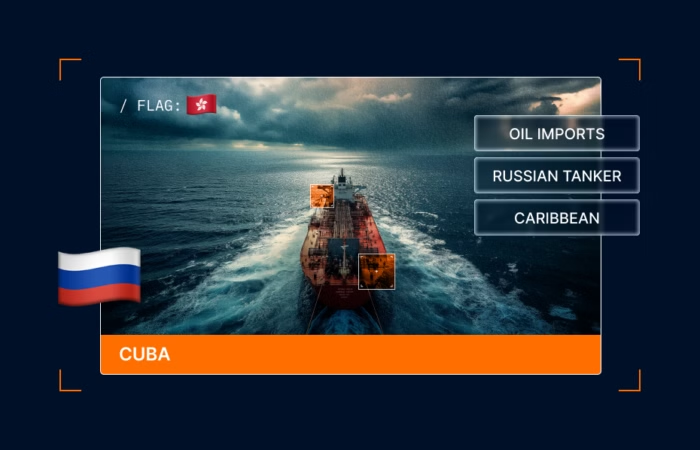
A tanker carrying Russian diesel is sailing for Cuba even as tightening U.S. pressure on the island’s fuel supply has forced other shipments to abort voyages or cancel loadings.
Vessel Movements, AIS Changes, and Cargo Origin
The Hong Kong-flagged medium-range tanker initially broadcast Havana as its destination on February 7, then altered its AIS signal to indicate arrival in the “Caribbean Sea” within roughly two weeks. The destination was later revised again to “Gibraltar for orders,” even after the tanker had already transited the strait. These adjustments are often used by vessels seeking to obscure their final discharge intentions.
Windward analysis suggests the vessel loaded its cargo through a ship-to-ship transfer conducted offshore near Cyprus while its AIS transmission was temporarily switched off, a common deceptive shipping practice.

AIS data show the tanker’s draft increased on February 8, several days after it departed the area, which is frequently used by tankers for the floating storage and transfer of Russian middle distillate cargoes originating from Black Sea ports. The vessel had loitered in that zone for approximately two weeks before departing.
Ship-to-ship transfers outside territorial waters, where port-state oversight is limited, have become a common practice in oil trades to circumvent sanctions and regulatory scrutiny.
If the tanker reaches Cuba in early March, it would mark the first confirmed arrival of a refined products cargo at the island since early January, according to Windward analysis combined with Vortexa commodity-tracking data.
Fuel Supply Disruptions and U.S. Policy Context
The shipment comes as fuel supply disruptions intensify across the Caribbean following new U.S. policy measures aimed at deterring oil exports to Havana. On January 29, Washington issued an executive order, declaring a national emergency and authorising tariffs on imports from countries that supply oil to the island. The policy has already had a visible impact on regional shipping activity, deterring or delaying fuel deliveries to Cuba.
Recent shipping data supports this shift. A liquefied petroleum gas carrier that routinely supplies the Cuban market diverted earlier this month to Kingston, Jamaica – a regional LPG load port – but after waiting offshore for nine days, departed without cargo and returned to Cuba empt.
In a separate incident, a small 12,000-dwt products tanker reportedly reversed course while sailing toward Cuba after passing Haiti amid unconfirmed reports that a U.S. Coast Guard cutter had intervened.

Impact of Fuel Shortage on Cuba
The tightening supply squeeze is unfolding as Cuba faces a severe fuel shortage that has triggered widespread power outages and economic disruption. Cuban officials and independent reports indicate that fuel shortages have reached crisis levels, affecting public services, transport, and hospitals.
Oil shipments from key suppliers, including Russia, Venezuela, and Mexico, have halted in January and February. This follows a broader escalation of pressure after the U.S. capture of former Venezuelan President Nicolás Maduro on January 3. Russia has pledged its continued support.
The Cuba-bound tanker is not sanctioned and has not previously called at a Cuban port, according to Windward analysis.
Trending
- The EU’s 18th Sanctions Package Lookback Started. Trading Russian Products? You're At Risk. Nov 24, 2025
- Tanker Freight Rates Hit Five-Year High Amid Russian Oil Sanctions Shake-Out Nov 6, 2025
- Sanctioned, Stateless, and Still Sailing: Expert Insights from the Frontlines of Maritime Sanctions Nov 3, 2025
Explore more

Russia Expands Dark Fleet of LNG Carriers
At a Glance Covert Transfers and Reflagging Activity Three 20-year-old liquefied natural gas (LNG) carriers were recently sold to a newly formed company in Türkiye, with two subsequently reflagged to Sierra Leone, a ship registry favored by Russia’s dark fleet. All three LNG carriers have yet to signal their next destination to load a post-sale...
Read more

Distress or Deception? Sea Horse ‘Not Under Command’ While Delivering Cuba Gasoil
At a Glance Sea Horse, a medium range tanker sailing for Cuba laden with Russian gasoil has been broadcasting it is “not under command” and that it is drifting in the Sargasso Sea for nearly three weeks. AIS tracking suggest the Hong Kong-flagged tanker has now resumed its voyage for Cuba and is set is...
Read more

U.S. Treasury Expands Pressure on Iran’s Shadow Fleet and Weapons Procurement Networks
At a Glance Expanding Pressure on Iran’s Maritime and Weapons Networks On February 25, 2026, the U.S. Department of the Treasury’s Office of Foreign Assets Control (OFAC) designated more than 30 individuals, entities, and vessels linked to Iran’s shadow fleet and to networks supporting ballistic missile and advanced conventional weapons production. The action targets two...
Read more

The EU Maritime Services Ban That Didn’t Pass: Implications for Russian Trade
At a Glance A Sanctions Escalation That Stalled The European Union’s proposed maritime services ban on Russia was expected to mark a structural escalation in sanctions enforcement. Instead, EU ministers failed to reach an agreement, delaying the adoption of the bloc’s 20th sanctions package after opposition led by Hungary, with at least one other member...
Read more