


March 12, 2026
March 12, 2026: Iran War Maritime Intelligence Daily


REPORTS
Top 7 Geopolitical Disruptions in Q3 2025
What’s inside?
- In Q3 2025, the number of vessels sanctioned by the EU, UK, and U.S. since 2023 surpassed 1,000.
- Greater EU–UK alignment and the ongoing crackdown on Russia’s shadow fleet reduced the number of newly sanctioned vessels in Q3 2025.
- Together, the UK and EU designated 311 Russia-trading vessels in Q3, bringing their totals to over 540 and 480, respectively. Of these, 369 overlap. The U.S., meanwhile, has imposed no Russia-related shipping sanctions since January of this year.
- Record vessel blacklistings last quarter were driven by the EU’s 18th sanctions package on Russia, the UK’s addition of over 200 ships, and the U.S. Treasury’s largest Iran-related action since 2018, which targeted more than 60 vessels. (UN snapback sanctions on Iran were excluded from these figures.)
- Notably, among the 60 vessels was a fleet of over 20 Iran-calling containerships, signaling that the U.S. Office of Foreign Assets Control is now scrutinizing Iranian seaborne trade beyond oil and gas.
- Quarterly growth in the cumulative number of vessels sanctioned by the EU, UK, and U.S. slowed to 15%, down from the record 35% expansion in Q2. Still, the total number of sanctioned ships across these authorities remains 3.7 times higher than a year ago.
- More than 11,600 vessels worldwide were affected by GPS jamming in Q3 2025 — a slight decrease from 13,000 in the previous quarter.
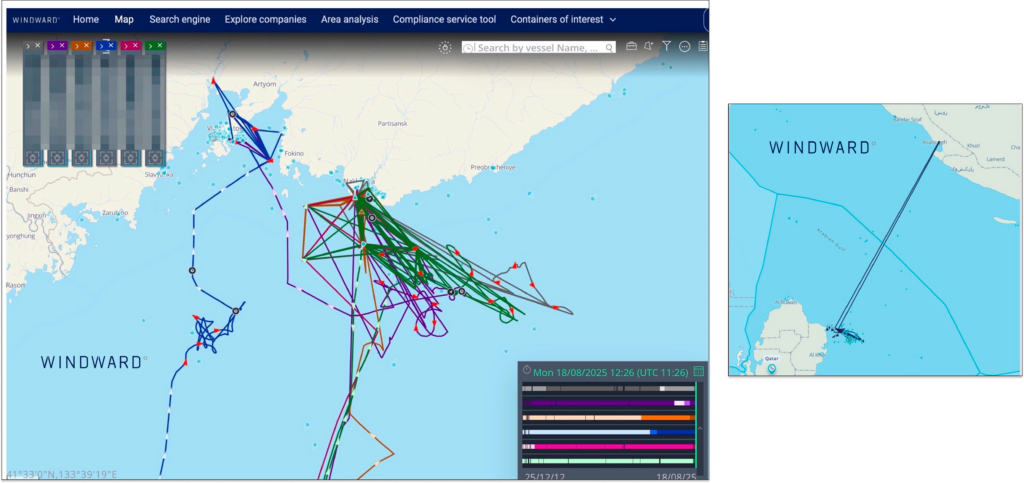
- A new GPS jamming hotspot was identified in Q3 2025 at Nakhodka Bay, Russia’s eastern Pacific port. More than 600 vessels were affected there and at the nearby Kozmino oil terminal.
- GPS jamming incidents in Q3 2025 were up 510% from Q1, underscoring how quickly this major threat to navigation and safety has become entrenched in maritime risk.
Crude Oil Exports (In Collaboration with Vortexa)
- Preliminary data show that crude and condensate exports averaged 43.1 million barrels per day in Q3 2025, exceeding pre-pandemic levels for the first time as the OPEC+ cartel continued to unwind production cuts.
- September exports averaged 45.5 million barrels per day — the highest since April 2020, when Saudi Arabia briefly flooded the market during a short-lived price war that ended as global demand collapsed. Spot freight rates for the largest tankers temporarily surged above $100,000 per day last month.
- The largest quarter-on-quarter export increases came from Russia (+250,000 bpd), the UAE (+220,000 bpd), and Saudi Arabia (+40,000 bpd).
- Saudi Arabia exports registered a month-on-month gain of 700,000 bpd in September to reach 6.7 million bpd, the highest since April 2023.
- Russian crude exports averaged 3.9 million barrels per day in Q3 2025, up from 3.4 million bpd in September 2024.
- The rise, roughly half a million barrels per day, followed Ukrainian drone attacks that left more than 1 million bpd of domestic refining capacity offline, diverting more crude to export markets.
- Stockpiling pushed China’s seaborne crude imports 13% higher year over year in Q3 2025, reaching an estimated 10.8 million bpd — roughly unchanged from the previous quarter.
- In Q3 2025, the number of vessels registered under false flags increased by 22%, highlighting the continued expansion of fraudulent registry activity.
- By Q3 2025, the number of falsely flagged vessels had doubled since January, highlighting the rapid escalation of deceptive registration practices.
- During Q3 2025 four newly identified fraudulent registries emerged:
-
- Tonga
- Maldives
- Mozambique
- Angola
Western governments pressured countries that outsource their ship registries to private operators to remove sanctioned vessels, triggering record levels of flag-hopping and a growing shift toward fraudulent registries.