March 25, 2026
March 25, 2026: Iran War Maritime Intelligence Daily

Windward transforms fragmented maritime data into a strategic asset, fusing 30+ trusted sources with AI to help organizations overcome complexity and make better data-driven decisions for operational excellence.













In an industry generating 100+ million maritime data points daily, Windward cuts through manipulation, ownership opacity, and data gaps – delivering clean, verified insights you can act on with full operational confidence.
Access real-time maritime visibility with 30+ data sources: including multi-satellite, terrestrial, and vessel-based AIS – to ensure global, gap-free coverage with built-in redundancy.
Our patented models distill over 100 million daily signals into 10 million clean, contextualized and validated movements – removing noise from GPS jamming, identity spoofing and false flagging to deliver reliable tracks and fewer false alerts.
Proprietary AI models analyze 12+ years of behavioral data to detect deceptive shipping practices like AIS manipulation and illicit ship-to-ship (STS) transfers, with context that reduces false positives and surfaces real risk.
A pre-matched database maintained with expert validation and freshness triggers, providing accurate visibility across 7 ownership levels, including the UBO, powered by Dun & Bradstreet.
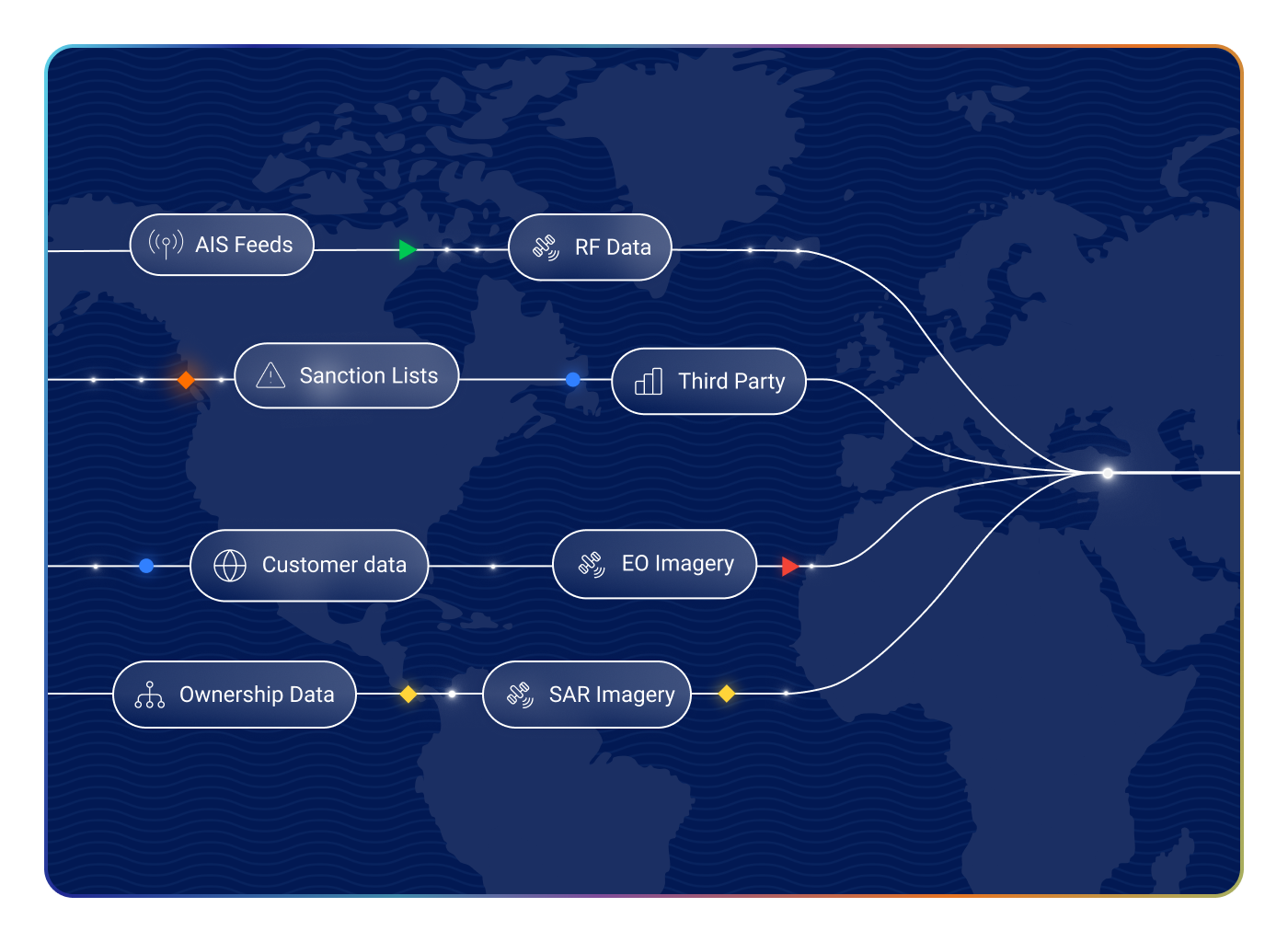
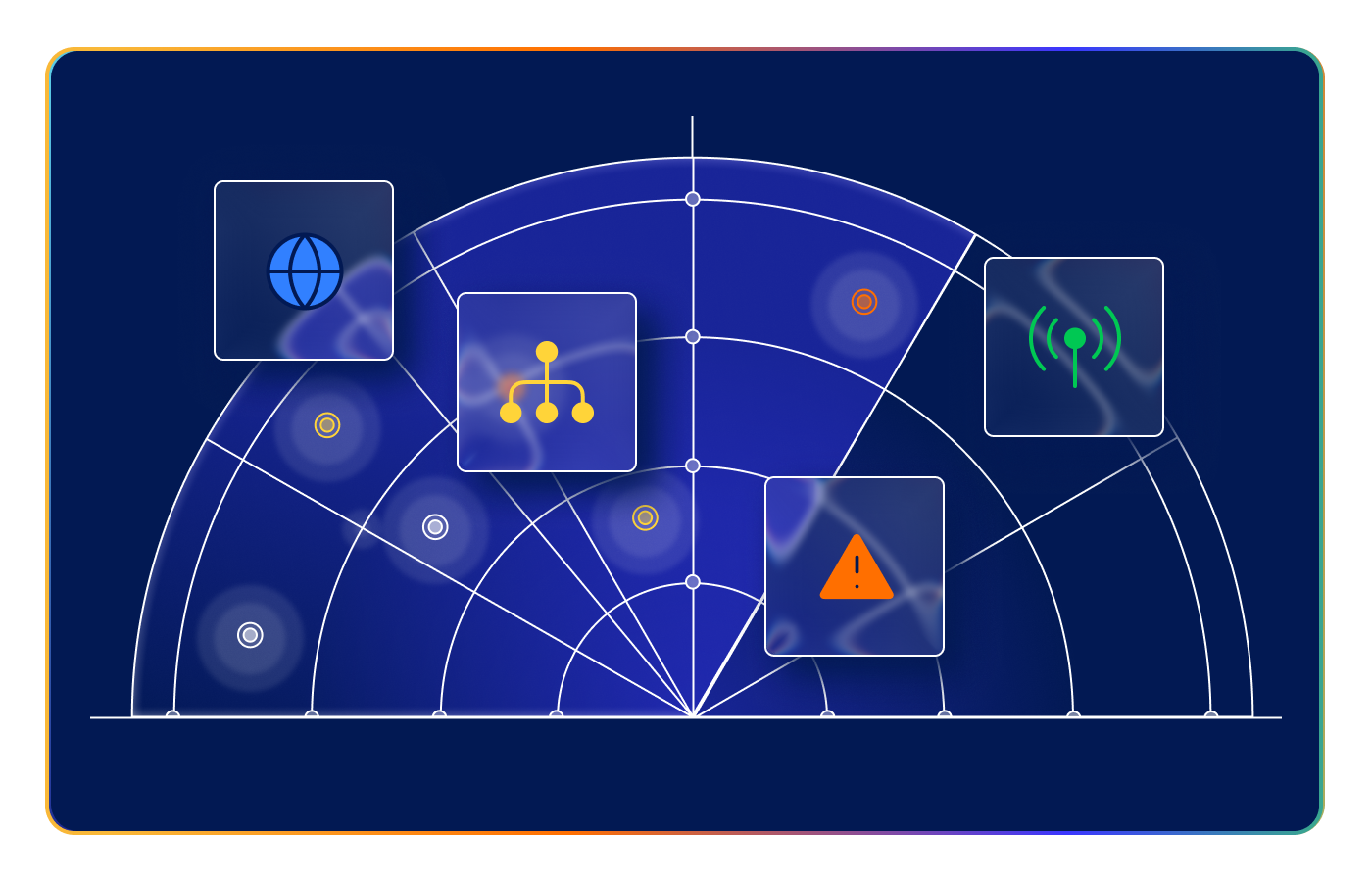
Windward ensures uninterrupted global visibility by continuously ingesting and reconciling multiple data streams. We cross-check data from diverse, trusted sources, staying resilient to market shifts and keeping every shipment and vessel reliably in view, even in remote or high-risk regions.
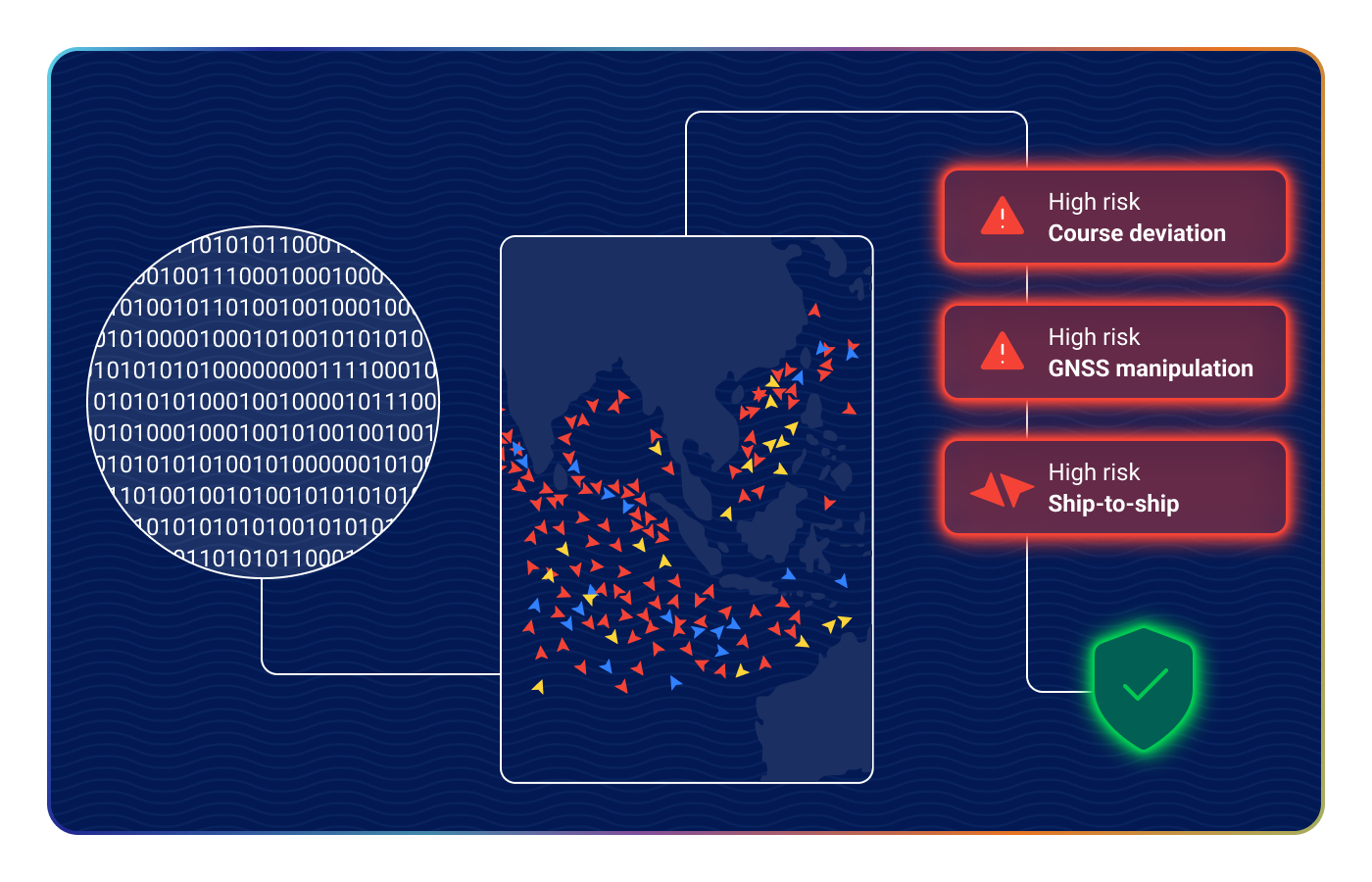
Our AI models are trained on real-world behaviors and are continuously aligned with evolving regulations. Combined with expert oversight and context-rich behavioral analysis, our system flags only what’s truly risky, reducing noise and enabling swift responses.
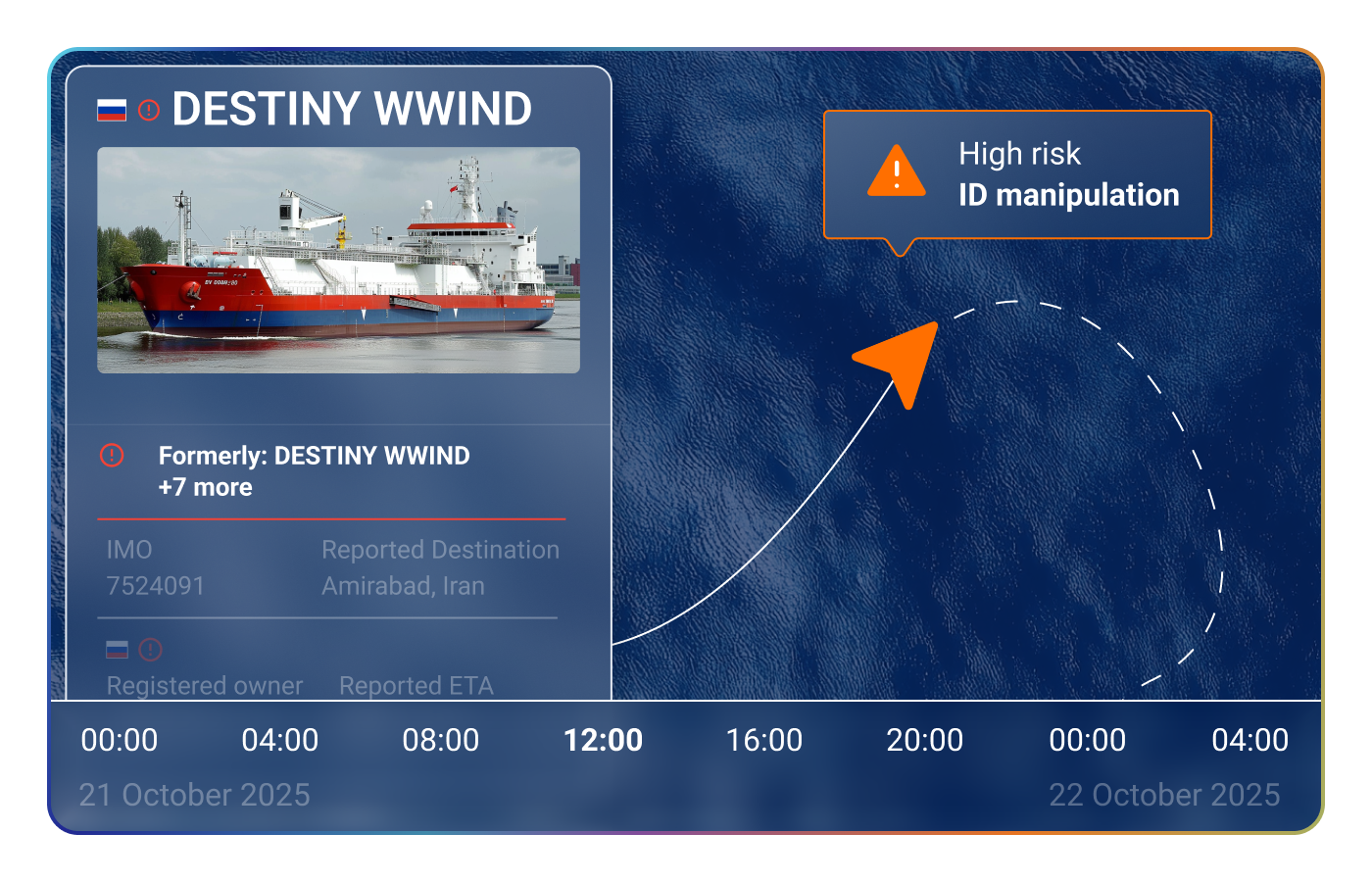
Stay current with verified changes delivered fast. We roll out updates quickly to keep data and risk models aligned with regulators, industry standards, and geopolitical shifts – so you act sooner with confidence, keep operations on schedule, and protect margins and trust.
Sharing your ownership data with Windward helps position your fleet as verified and trusted, allowing you to stay compliant with evolving regulation and accelerate business growth.
Join a global coalition of “A-rated” companies committed to transparency and legitimate trade, and gain benefits like free MAI Expert™ access and enhanced UBO data from Dun & Bradstreet.
What does Windward mean by “data quality” in a maritime context?
At Windward, data quality means accuracy, completeness, timeliness, and explainability at scale. Maritime data is fragmented, manipulated, and often incomplete. Windward transforms raw signals from dozens of sources into validated, contextual intelligence that reflects how vessels actually operate, so decisions are based on reality, not assumptions.
What data sources does Windward use to ensure reliable maritime coverage?
Windward fuses data from 30+ trusted sources, including multi-satellite, terrestrial, and vessel-based AIS, sanctions and watchlists, ownership registries, behavioral signals, Remote Sensing Intelligence, and open-source intelligence. Built-in redundancy allows the platform to cross-validate inputs and maintain global visibility even when individual sources degrade or are manipulated.
How does Windward handle missing, inconsistent, or manipulated data?
Windward continuously reconciles data across sources to identify gaps, inconsistencies, and manipulation attempts. Proprietary AI models detect anomalies such as AIS spoofing, GPS jamming, and false port calls, while expert analysts validate edge cases. This combination ensures that unreliable inputs are flagged, corrected, or contextualized rather than being silently passed through.
How does Windward reduce false positives while detecting real risk?
Rather than relying on isolated signals, Windward evaluates behavior over time and in context. AI models trained on more than 12 years of maritime behavior assess patterns, intent, and relevance, dramatically reducing noise. The result is approximately 75% fewer false positives compared to traditional rule-based or list-only systems.
How accurate is Windward’s vessel and ownership data?
Windward maintains a pre-matched ownership database covering seven levels of ownership and management, including Ultimate Beneficial Ownership (UBO), powered by Dun & Bradstreet. Data is continuously refreshed through AI-triggered updates and expert review, ensuring ownership intelligence reflects current control structures rather than outdated registries.
How often is Windward’s data updated?
Data is updated on a near-real-time and daily basis, depending on the source and signal type. Behavioral models run continuously, ownership and entity updates appear daily, and regulatory or sanctions-driven changes are incorporated rapidly as new guidance or designations are issued.
How does Windward ensure data stays aligned with regulations and enforcement priorities?
Windward continuously translates new regulations, advisories, and enforcement guidance into updated detection logic. Risk models are adjusted as tactics evolve – such as changes in sanctions evasion or GPS-jamming behavior – ensuring intelligence stays aligned with regulatory reality, not static interpretations.
What does “AI-powered, expert-verified” mean in practice?
AI performs the heavy lifting at scale by detecting patterns, anomalies, and inconsistencies across millions of data points. Human maritime experts then validate complex cases, review edge conditions, and refine models. This hybrid approach combines speed with judgment, producing intelligence that is both scalable and defensible.
How does Windward validate sanctions and compliance data?
Windward screens against 1,000+ global sanctions and watchlists, powered by LSEG, and correlates list data with real-world vessel behavior and ownership structures. This ensures sanctions exposure is evaluated not only by designation, but by how vessels operate, who controls them, and where risk actually materializes.
How does Windward measure and prove data reliability?
Reliability is demonstrated through measurable outcomes: fewer false positives, earlier risk detection, explainable alerts, and consistent alignment with enforcement actions. For example, Windward’s models flagged 99% of vessels designated in 2024 as high-risk prior to their official sanctioning, based on behavioral indicators, not hindsight.
Can customers audit or explain Windward’s data and decisions?
Yes. Every alert, score, and recommendation is explainable. Users can trace detections back to underlying data, behavioral patterns, and ownership context, creating transparent, audit-ready intelligence suitable for regulators, counterparties, and internal governance.
Can organizations bring their one data into Windward, and how is it validated?
Yes. Windward supports Bring Your Own Data (BYOD) and Bring Your Own Imagery (BYOI), allowing organizations to ingest proprietary datasets such as internal vessel lists, ownership records, shipment data, and customer-provided satellite or aerial imagery, or investigative findings. All customer-provided data and imagery are normalized, cross-validated against Windward’s multi-source intelligence, and contextualized within behavioral and risk models. This ensures internal data is not treated in isolation, but strengthened through correlation with verified maritime intelligence.
How does high-quality data translate into business and operational impact?
Trusted data enables faster approvals, fewer escalations, reduced operational friction, and earlier risk mitigation. Whether clearing a trade, protecting infrastructure, prioritizing inspections, or identifying new opportunities, high-quality intelligence allows teams to act confidently without slowing operations.
What is “Know Your Data (KYD™)” at Windward?
Know Your Data (KYD™) is Windward’s standard for complete, validated, and explainable maritime intelligence. It represents a commitment to transparency, accuracy, and continuous improvement, ensuring every decision is grounded in data you can trust.