


March 31, 2026
March 31, 2026: Iran War Maritime Intelligence Daily


March 31, 2026: Iran War Maritime Intelligence Daily
What’s inside?
At a Glance
- Six AIS-transmitting vessels crossed the Strait of Hormuz under Iran’s controlled transit system, with additional dark movements likely.
- Bandar Abbas activity reveals a structured AIS-dark logistics model balancing energy exports, food imports, and China-linked trade.
- Iranian oil on water reached approximately 184 million barrels, with continued AIS-dark export operations from Kharg Island.
- Ust-Luga exports remain severely disrupted, with only one shipment recorded in seven days.
- Russian crude flows are adapting, including a new shipment to Cuba via a sanctioned tanker.
- A drone strike on a laden VLCC near Dubai highlights expanding kinetic risk inside Gulf waters.
- Port disruptions across the Gulf and external hubs reflect continued rerouting pressure and operational instability.
Operational Overview
Transit through the Strait of Hormuz remains controlled rather than open, but throughput is increasing. On March 30, six AIS-transmitting vessels crossed the corridor, while additional movements likely occurred under partial or fully dark conditions.
At the same time, vessel activity at Bandar Abbas provides visibility into how this system operates in practice. A coordinated pattern is emerging: outbound energy exports continue, inbound food supply is prioritized, and China-Iran trade flows remain active, all under AIS-dark conditions.
Beyond Hormuz, pressure on global oil flows is intensifying. Iranian exports continue through opaque logistics networks, Ust-Luga remains disrupted following repeated UAV strikes, and a direct strike on a laden VLCC near Dubai signals expanding exposure across Gulf waters.
The operating environment reflects three concurrent dynamics: controlled access through Hormuz, large-scale dark activity, and growing kinetic risk to infrastructure and anchored vessels.
Controlled Transit Through the Strait of Hormuz
Transit activity on March 30 confirms the continued operation of an Iranian-managed corridor.
Three AIS-transmitting vessels exited the Gulf and three entered, bringing confirmed crossings to six.

SAR imagery at 02:14 UTC identified two ultra-large container vessels, approximately 400 meters in length, transiting in close proximity with a combined capacity exceeding 36,000 TEU.

One vessel maintained AIS transmission during outbound transit. The second lost signal approximately 6.6 nautical miles south of the first vessel shortly before crossing. Both vessels reported Port Klang, Malaysia, as their destination.
The pattern reflects partial visibility rather than full transparency. Commercial vessels continue to move through the corridor, but under conditions that allow for intermittent or suppressed tracking.
Bandar Abbas Reveals the Controlled System in Practice
Activity at Shahid Rajaei port provides a clear operational picture of Iran’s controlled maritime system.
A total of 24 AIS-dark vessels were identified across the oil, bulk, and container terminals, all assessed to be operating under Iran-controlled access through Hormuz.
Oil Terminal
Two tankers, each between 180 and 250 meters, were identified loading dirty petroleum products for export. Total volume is assessed at approximately 700 thousand barrels.
Outbound petroleum flows continue under fully dark conditions.
Bulk Terminal
Eight vessels, ranging from 150 to 190 meters, were discharging an estimated 375,000–500,000 tonnes of grain, corn, and agricultural inputs. The cargo is valued at approximately $80–120 million under current freight conditions.
Iran continues to prioritize inbound food supply. The country remains structurally dependent on grain imports through Bandar Abbas, as Caspian flows from Russia cannot replace deep-water Gulf imports.
Container Terminal
Fourteen vessels, between 150 and 300 meters, were identified with an estimated 55,000–90,000 TEU in motion, valued at approximately $220–360 million.
Smaller feeder vessels appear to be dual-cycling cargo. They discharge Chinese-manufactured goods, machinery, and chemicals inbound, then load Iranian petrochemicals, minerals, and dried goods outbound. Larger vessels are primarily discharging inbound cargo.
China remains Iran’s dominant trade partner. Iran’s export basket is smaller and faces constrained demand under sanctions and wartime conditions.
Taken together, Bandar Abbas is operating as a controlled logistics node. Energy exports continue, food imports are prioritized, and China-linked trade remains active — all under AIS-dark conditions tightly linked to Hormuz access.
Iranian Oil Exports Continue Under Dark Operations
Iranian oil flows remain active despite constrained transit conditions.
As of March 30, cargo on water is estimated at approximately 184 million barrels. This includes 163 million barrels of crude and condensates, 13.22 million barrels of clean petroleum products, and 7 million barrels of dirty petroleum products. This reflects an increase of approximately 10 million barrels compared to the previous day.

Export activity at Kharg Island continues. On March 29, three crude tankers departed carrying an estimated combined volume of approximately 4.7 million barrels. All three vessels operated without AIS transmission during both loading and departure.

One vessel is flagged to Nicaragua, while the other two are Iranian-flagged. All have a documented history of linking dark Gulf operations with dark activity in the Malaysia region and are sanctioned.
The pattern indicates sustained export capacity supported by opaque routing and offshore logistics networks.
Ust-Luga Disruption Constrains Russian Exports
Ust-Luga remains under sustained operational pressure following repeated UAV strikes.
The port has been targeted five times over the past seven days. During this period, only one export event has been recorded, totaling approximately 730 thousand barrels.

This represents a significant deviation from baseline activity. Over the past 12 months, Ust-Luga exported approximately 536 million barrels, averaging around 1.15 million barrels per day. Of this, approximately 343 million barrels were directed toward Asian markets, including India, China, and Singapore, while 73 million barrels were destined for European buyers.
March 2026 now reflects the lowest export levels from Ust-Luga in at least 12 months, indicating material disruption to one of Russia’s primary Baltic export terminals.
Russian Oil Flows Adapt to Disruption
Russian export flows continue adapting despite infrastructure pressure.
A notable development is the first documented crude shipment to Cuba since December 20, 2025. The cargo totaled approximately 749.5 thousand barrels of Urals crude.
The vessel departed Primorsk on March 8 and arrived in Matanzas, Cuba, on April 1, 2026. It was transported by a Russian-flagged tanker operating within the sanctioned dark fleet, with a documented history of identity manipulation, including flag hopping and identity obfuscation.

Despite this history, the vessel maintained continuous AIS transmission throughout the voyage.
The delivery marks a resumption of Russian crude supply to Cuba following reduced Venezuelan and Mexican volumes, highlighting continued diversification of export destinations under constrained conditions.
Gulf Security Incident Signals Expanding Risk
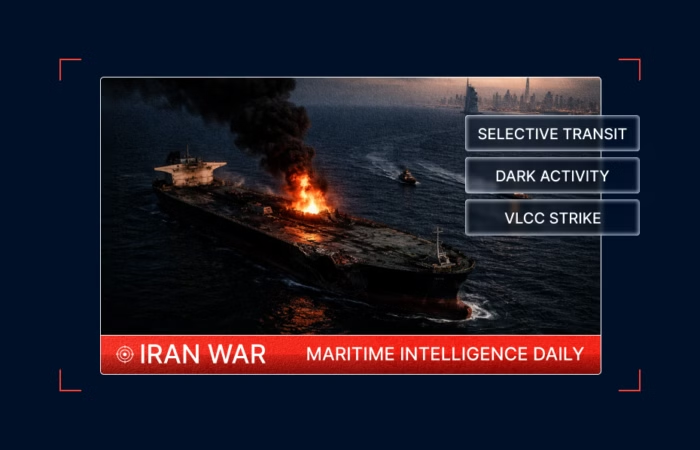
A drone strike targeted a laden VLCC approximately 31 nautical miles northwest of Dubai.
The vessel was carrying approximately 2 million barrels of crude at the time of the strike. The incident caused a fire onboard, which was later contained without casualties or reported pollution.
The event signals a shift in exposure. Risk is not limited to transit corridors. Anchored and staging vessels within Gulf waters are increasingly vulnerable to direct targeting.
Port Operations Disruptions
Port activity across the region continues to show instability and rerouting pressure.
Inside the Gulf
Jebel Ali, UAE:
- 5 port‑of‑destination changes (0‑baseline from the previous day, +34.62% vs 7‑day average).
Port Khalid, Sharjah, UAE:
- 4 port‑of‑destination changes (+100% from the previous day, +300% vs 7‑day average).
Shuwaikh, Kuwait:
- 4 transshipment rollovers (+100% from the previous day, +1300% vs 7‑day average).
- 4 transshipment‑delay cases (0‑baseline from the previous day, +1300% vs 7‑day average).
Khalifa Bin Salman, Bahrain:
- 3 port‑of‑destination changes (+200% from the previous day, +950% vs 7‑day average).
Outside the Gulf
Khor Fakkan, UAE:
- 11 port‑of‑destination changes (+450% from the previous day, +4.05% vs 7‑day average).
Salalah, Oman:
- 5 transshipment rollovers (+66.67% from the previous day, ‑75.35% vs 7‑day average).
- 5 transshipment‑delay cases (+66.67% from the previous day, ‑71.77% vs 7‑day average).
These patterns indicate continued disruption to cargo flow and scheduling, with rerouting pressure affecting both Gulf and external hubs.
Outlook
Hormuz remains operational but tightly controlled, with selective transit and partial visibility defining vessel movement.
Bandar Abbas activity confirms a structured system balancing outbound energy flows, prioritized food imports, and sustained China-linked trade under AIS-dark conditions.
Iranian exports continue through opaque logistics networks, while Ust-Luga disruption is constraining Russian capacity. At the same time, Russian flows are adapting through alternative routes and sanctioned vessels.
The strike on a laden VLCC near Dubai signals that kinetic risk is expanding beyond chokepoints into broader Gulf waters.
In the near term, maritime operations will continue to be shaped by controlled access, dark activity, infrastructure disruption, and increasing exposure across both transit corridors and anchored positions.
Explore more

March 30, 2026: Iran War Maritime Intelligence Daily
At a Glance Operational Overview Global oil and maritime markets are now facing simultaneous pressure across three critical export nodes. The Strait of Hormuz remains effectively closed under selective IRGC-controlled transit. Ust-Luga has sustained its fifth UAV attack in seven days. Yanbu is operating as the primary alternative outlet for Gulf crude while facing a...
Read more

Week Four of the Iran War: A Maritime Intelligence Breakdown
At a Glance The Fourth Week of the Iran War at Sea Four weeks into the conflict, maritime activity is no longer defined by disruption alone, but by the emergence of a new operating model. The system has not stopped. It has adapted. The Strait of Hormuz is functioning under controlled access rather than open...
Read more

March 29, 2026: Iran War Maritime Intelligence Daily
At a Glance Operational Overview Maritime activity in and around the Strait of Hormuz is entering a more restrictive and unpredictable phase. While vessel movement continues through the Iranian-managed corridor near Larak Island, access is no longer consistent or assured. Approval is increasingly conditional, opaque, and subject to shifting criteria. The clearest signal of this...
Read more

March 27, 2026: Iran War Maritime Intelligence Daily
At a Glance Operational Overview Maritime activity in and around the Strait of Hormuz has entered a new phase. The system is no longer defined by suppression of traffic, but by its selective reintroduction under an increasingly formalized Iranian control regime. On March 26, seven non-Iranian vessels completed confirmed transits through the Strait, marking a...
Read more