


March 26, 2026
Maritime Terms Explained: The Iran War & Strait of Hormuz Crisis


March 3, 2026: Iran War Maritime Intelligence Daily
What’s inside?
At a Glance
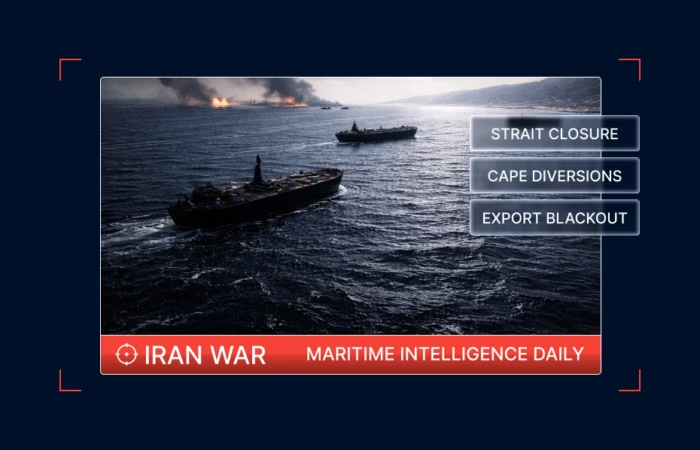
- Iran’s Revolutionary Guards declared the Strait of Hormuz closed and threatened to fire on vessels attempting transit.
- Only seven crossings were recorded on March 2, a 61% drop from the prior day and dramatically below the 7-day average of 79.
- Diversion traffic around the Cape of Good Hope surged 112%, signaling structural rerouting.
- Iran’s visible crude exports have effectively disappeared from transparent tracking systems.
- Strike incidents expanded to include a U.S.-flagged tanker hit in Bahrain, an IRGC-claimed drone strike off Khor Fakkan, a kinetic strike on the Port of Duqm, and drone debris impacting energy infrastructure at Fujairah.
- Sanctions evasion patterns are adapting across the Red Sea and Libyan corridors.
Operational Overview
As of March 3, the maritime environment reflects the declared closure of the Strait of Hormuz and sustained commercial withdrawal from the corridor rather than temporary hesitation.
On March 2, Iran’s Revolutionary Guards formally declared the Strait of Hormuz closed and warned that vessels attempting transit would be targeted.
Traffic data confirms the impact. Only seven total crossings were recorded on March 2 – three inbound, three outbound, and one additional transit – representing a 61.11% decrease from the previous day and dramatically below the 7-day moving average of 79 crossings.
Commercial tanker traffic has not resumed since the declaration, and movements recorded were limited and atypical relative to baseline flow patterns.
At the same time, Iranian visible exports have nearly vanished from transparent monitoring systems, while alternative routing around the Cape of Good Hope has accelerated sharply. The operating environment now reflects simultaneous transit collapse, infrastructure exposure, and adaptive logistics behavior.
The Strait of Hormuz is frozen. Global energy corridors are fracturing as the conflict zone expands.
— Windward (@WindwardAI) March 3, 2026
• Hormuz traffic collapsed 61% before closure.
• Cape transits surged 112% in 24 hours.
• Energy hubs under attack in Fujairah & Duqm.
• Iranian exports have gone dark.… pic.twitter.com/TnicRZRk7e
The Strait of Hormuz Is Closed
With only seven crossings recorded on March 2, Hormuz traffic has collapsed to near-zero relative to baseline norms.
The limited movements included one oil products tanker, one bulk carrier, and five vessels classified as other or unknown.

Flag distribution included:
- India: 3
- Barbados: 1
- Philippines: 1
- Comoros: 1
- Iran: 1
One outbound Barbados-flagged tanker was assessed as a high smuggling risk. The remaining six vessels were assessed as low-risk profiles.
Red Sea and Suez Canal Activity Remain Below Baseline
Bab el-Mandeb
Only two crossings were recorded, representing a 100% increase from the prior day’s single transit but still 36.3% below the 7-day moving average of 3.14 crossings.
The vessels included one general cargo vessel and one vehicle carrier, flagged to Liberia and the Marshall Islands. One vessel carried a moderate smuggling risk, while the other was assessed as low risk.

Traffic remains materially below normal levels.
Suez Canal
32 crossings were recorded, slightly below the 7-day average of 36.57 and representing a 3.03% decrease from the previous day.
Vessel subclasses included:
- 9 bulk carriers.
- 6 container vessels.
- 3 oil products tankers.
- 2 crude tankers.
- 12 additional mixed vessel types.
Seven vessels were assessed as high smuggling risk, and twenty were low risk.

While Suez remains active, the continued presence of elevated-risk vessels underscores compliance and monitoring complexity amid regional instability.
Cape of Good Hope Diversions Accelerate
As Hormuz remains closed, diversion flows have surged.
87 transits were recorded around the Cape of Good Hope, with 29 eastbound and 58 westbound, representing a 112.20% increase from the previous day and well above the 7-day moving average of 68.86.
The vessel mix included:
- 48 bulk carriers.
- 15 container vessels.
- 4 LNG tankers.
- 2 crude oil tankers.
- 2 LPG tankers.
- 2 oil product tankers.
- 14 additional mixed subclasses.
Of these 87 vessels, none were assessed as high smuggling risk, one was categorized as medium risk, and 86 were low-risk profiles.

The scale and risk composition indicate structural rerouting by mainstream commercial operators rather than shadow fleet maneuvering.
Iranian Export Blackout
While more than 65 million barrels moved elsewhere across the region during this monitoring window, Iran’s visible exports have effectively disappeared from transparent tracking systems.
Only one vessel, Zatara, carrying approximately 33,000 barrels of clean products from Assaluyeh, appears in visible data.
This deviation suggests either a near-total operational halt at Kharg Island or a sustained shift to dark activity designed to obscure flows from monitoring systems.
The absence of observable Iranian crude exports marks a significant deviation from normal export behavior.
Strike Activity Beyond the Strait
Off Khor Fakkan, the IRGC claimed responsibility for a drone strike on Athe Nova, a Honduras-flagged vessel operated by UAE-based Hessonite Ship Management. Windward tracking shows erratic, near-stationary movement at 16:37 UTC on March 2, behavior consistent with distress or loitering.
At Khalifa Bin Salman Port in Bahrain, the U.S.-flagged tanker Stena Imperative was struck while moored at approximately 02:57 GMT on March 2. AIS transmissions had ceased on February 28 and remained inactive for over 72 hours prior to the incident. Bahraini authorities attributed the fire to debris from an intercepted missile.
Port of Duqm Strike
In Oman, Iranian forces conducted a strike on the Port of Duqm targeting industrial and logistics basins. Fourteen vessels were present within the port perimeter at the time, including crude tankers, product tankers, bulk carriers, and container vessels. Preliminary assessments indicate structural damage to dry-dock infrastructure and fires near container facilities.

Fujairah Energy Infrastructure Incident
On March 3, a fire broke out at the Fujairah Oil Industry Zone after UAE air defenses intercepted a drone, and falling debris struck a storage tank.
At the time of the incident, 116 vessels were present in the anchorage area, including 29 oil products tankers, 6 crude tankers, 8 oil/chemicals tankers, and additional bulk and support vessels.
Of the vessels present, 93.1% were assessed as low risk, 3.4% as moderate risk, and 3.4% as high risk.
The incident highlights the vulnerability of dense tanker anchorages and storage infrastructure to spillover effects even when primary strikes are intercepted.

Outlook
With Hormuz declared closed and crossings near zero, commercial tanker traffic remains effectively halted.
Diversion flows around the Cape of Good Hope indicate that operators are adjusting structurally rather than waiting for short-term stabilization. At the same time, Iranian visible exports remain absent from transparent tracking systems, increasing opacity in regional energy flows.
Infrastructure strikes in Duqm and Fujairah extend risk beyond transit corridors into export terminals, storage zones, and logistics hubs.
Absent rapid de-escalation, extended routing, congestion effects, insurance volatility, and continued sanctions-evasion behavior are likely to persist.
Windward will continue publishing daily Iran War Maritime Intelligence updates as vessel behavior, cargo movements, and risk conditions evolve.
Explore more

Maritime Terms Explained: The Iran War & Strait of Hormuz Crisis
Four weeks into the Iran war, maritime traffic through the Strait of Hormuz has not ceased, but it has fundamentally changed. AIS-visible crossings dropped to near zero at multiple points, with only 16 vessels recorded transiting the Strait throughout the third week of the conflict. Despite this collapse in visible movement, oil exports have continued,...
Read more

March 25, 2026: Iran War Maritime Intelligence Daily
At a Glance Operational Overview Maritime activity in and around the Strait of Hormuz remains constrained but operational under a clearly selective transit framework. While commercial shipping has not resumed through standard lanes, vessel movements continue through controlled routing patterns aligned with Iranian oversight. On March 24, only four AIS-transmitting vessels crossed the Strait, while...
Read more

March 24, 2026: Iran War Maritime Intelligence Daily
At a Glance Operational Overview Maritime activity in and around the Strait of Hormuz remains constrained but increasingly structured, as vessel movements continue under controlled routing patterns and elevated threat conditions. On March 23, limited transit activity was observed, with vessels routing north of Larak Island, reinforcing the emergence of a managed corridor rather than...
Read more

March 23, 2026: Iran War Maritime Intelligence Daily
At a Glance Operational Overview Maritime activity across the Arabian Gulf remains constrained but operationally active, with over 600 foreign-flagged vessels currently transmitting AIS in the region. While large-scale commercial flows continue, vessel behavior indicates sustained disruption, including elevated dark activity, reduced anchoring durations, and shifting routing patterns under heightened geopolitical control. Iran continues to...
Read more

Three Weeks Into the Iran War: A Maritime Intelligence Breakdown
At a Glance The Third Week of the Iran War at Sea Three weeks after the launch of Operation Epic Fury, the maritime conflict in the Gulf has moved beyond immediate disruption into a more structured and adaptive phase. Commercial traffic through the Strait of Hormuz remains near collapse, but the operating picture is no...
Read more