


March 31, 2026
One Month of War in the Gulf: Mapping the Global Maritime Disruption


March 10, 2026: Iran War Maritime Intelligence Daily
What’s inside?
At a Glance
- Commercial activity through the Strait of Hormuz fell again on March 9, with only a single outbound Iranian-flagged vessel recorded and no inbound movements observed.
- Defensive AIS nationality messaging appeared on 36 vessels in the Gulf, suggesting that some operators are actively adapting signaling behavior to the current threat environment.
- Regional traffic continues to redistribute rather than normalize, with Bab el-Mandeb declining, Suez recovering toward trend, and Cape of Good Hope transits remaining elevated.
- Pakistan has launched naval escort operations for merchant shipping as maritime security risk spreads beyond the immediate Hormuz chokepoint.
- Port exception activity is rising across Saudi Arabia, Oman, and Pakistan, indicating a widening logistical strain across regional infrastructure.
- Energy market stress remains acute, with Gulf crude rerouting, elevated prices, and tightening tanker availability reinforcing broader supply risk.
- Secondary effects are emerging outside the Gulf, including sharply reduced tanker arrivals in Cuba and possible dark activity near Cuban waters.
Operational Overview
Commercial shipping through the Strait of Hormuz reached a new low on March 9, with only one outbound transit recorded and no inbound movements observed. The vessel was Iranian-flagged, meaning that all detected crossings during the last 24 hours involved Iranian vessels, reinforcing the assessment that Western-linked commercial shipping has effectively withdrawn from the waterway.
Over the past nine days, only 66 commercial vessels have transited the Strait of Hormuz, representing a fraction of normal traffic levels and reinforcing the assessment that the waterway is effectively operating under blockade conditions.
Reports also indicate selective passage conditions within the Strait. While many international shipping companies have suspended transit entirely, some Iranian tankers continue to move through the waterway, and emerging reporting suggests that certain China-linked vessels may be attempting passage under different security conditions. At the same time, U.S. and British vessels have reportedly been blocked, highlighting the increasingly politicized nature of transit access.
At the same time, maritime traffic is being redistributed rather than restored. Bab el-Mandeb activity fell sharply, Suez Canal traffic rose back toward its recent average, and Cape of Good Hope transits remained elevated, confirming that long-haul rerouting around Africa continues to serve as the main alternative to disrupted Middle East routes. The appearance of defensive AIS nationality messaging on 36 vessels in the Gulf also suggests that some operators are actively adapting signaling behavior to the current threat environment.
Operational and strategic responses are widening beyond the immediate chokepoint. Pakistan has launched a naval escort operation for merchant shipping, while exception activity is rising across ports in Saudi Arabia, Oman, and Pakistan. Chinese maritime intelligence assets are also now operating in the Gulf of Oman within observation range of the conflict theater.
The impact is spreading into energy supply chains and secondary markets as well. Wet cargo flows remain heavily concentrated toward Asia, while Cuba is experiencing its lowest tanker arrivals in at least twelve months. No loaded tankers are currently reporting the island as a destination, and possible dark activity near Cuban waters remains under review. At the same time, Gulf producers, including Iraq and Saudi Arabia, are beginning to adjust production in response to export constraints.
Taken together, these signals indicate that the crisis is no longer defined only by transit suppression in Hormuz. It is now driving a wider reordering of vessel behavior, route choice, port performance, naval posture, and energy supply risk across multiple regions.
Strait of Hormuz Traffic
Transit activity through the Strait of Hormuz fell further on March 9.
A total of one crossing was recorded, with no inbound movements and one outbound movement, representing a 50% decrease from the previous day and remaining significantly below the seven-day average of 4.14 crossings.

The only observed vessel was Iranian-flagged. The exclusive presence of Iranian-flagged tonnage reinforces the view that Western-linked commercial traffic through the Strait remains effectively suspended.
This pattern aligns with broader reporting that international commercial operators have largely suspended passage, while Iranian vessels continue to move through the Strait under different operating conditions. The result is a highly restricted maritime corridor where transit appears increasingly selective rather than fully closed.
Defensive AIS Messaging Observed in the Gulf
A total of 36 vessels currently transmitting AIS signals in the Gulf have modified their destination fields to broadcast nationality information.
The majority of these vessels are Chinese-linked ships, accounting for 30 vessels. Their AIS messages are highly standardized and typically reference both ownership and crew nationality. Common messages include:
- “CHINESE CREW OWNER”
- “CHINA OWNER & CREW”
- “CHINESE VSL AND CREW”
Additional vessels broadcasting nationality messaging include five Iraqi vessels, typically referencing ownership identity with messages such as “IRAQI OWNER” or “IRAQI PORTS,” and one Turkish vessel broadcasting the message “TRIST-TURKISH CREW.”
The vessels broadcasting nationality messaging are primarily commercial cargo and tanker vessels. They include 22 cargo vessels — including bulk carriers, container vessels, vehicle carriers, and heavy-load carriers — and 11 tankers, including crude oil, chemical, and LPG tankers.
Their flag states are led by Panama (11 vessels), Liberia (6), Hong Kong (5), and Norway (3).
Bab el-Mandeb and Suez Canal Traffic
Bab el-Mandeb
Transit activity through Bab el-Mandeb declined on March 9.
A total of 16 crossings were recorded, including 7 inbound and 9 outbound movements, representing a 46.7% decrease from the previous day and falling below the seven-day average of 18.57 crossings.

Top vessel subclasses included four crude oil tankers, four container vessels, and three bulk carriers. Flag distribution was led by Liberia with four vessels, the Marshall Islands with four vessels, and Singapore with three vessels.
Despite the decline, Bab el-Mandeb remains materially more active than Hormuz and continues to function as an alternative route for traffic avoiding the Gulf.
Suez Canal
Transit activity through the Suez Canal increased on March 9.
A total of 40 crossings were recorded, including 21 inbound and 19 outbound movements, representing a 29.03% increase from the previous day and placing activity broadly in line with the seven-day average of 37.29 crossings.

Top vessel subclasses included nine bulk carriers, six general cargo vessels, and six crude oil tankers. Flag distribution was led by Panama with six vessels, followed by the Marshall Islands with four vessels and Liberia with four vessels.
The increase suggests that some traffic continues to move through the Mediterranean corridor even as Gulf routes remain highly constrained.
Cape of Good Hope Diversion
Transit activity around the Cape of Good Hope remained elevated.
A total of 81 crossings were recorded, including 39 eastbound and 42 westbound movements, representing an 8.99% decrease from the previous day but remaining broadly consistent with the seven-day average of 85 crossings.

Top vessel subclasses included 40 bulk carriers, 14 container vessels, and six crude oil tankers. Flag distribution was led jointly by Liberia and the Marshall Islands, with 18 vessels each, followed by Panama with 12 vessels.
Sustained volumes around the Cape suggest that long-haul rerouting around Africa remains a primary alternative for vessels avoiding Middle East transit routes.
Dry Bulk and Commodity Trade Disruption
Dry bulk trade through the Strait of Hormuz has collapsed alongside tanker traffic. Dry bulk transits have fallen by approximately 91%, with an estimated 280 bulk carriers currently stranded or effectively trapped inside the Gulf.
This disruption has severed supply chains for several globally significant commodities. The shutdown has affected approximately 18% of global iron ore pellet exports, primarily originating from Iran and Bahrain, as well as nearly 10% of global primary aluminum production, contributing to sharp price increases in aluminum markets.
The sudden interruption of these flows has also paralyzed minor bulk trade across the region, further amplifying the economic impact of the crisis beyond energy markets alone.
Pakistan Naval Escort Operations
Pakistan has launched a maritime security operation named Muhafiz-ul-Bahr to safeguard national shipping routes and protect critical Sea Lines of Communication (SLOCs).
According to the Pakistan Navy, the operation was initiated in response to the evolving regional maritime security environment and aims to ensure the uninterrupted flow of maritime trade. Naval vessels are currently escorting merchant ships transiting key sea lines of communication, including vessels operated by the Pakistan National Shipping Corporation.
At present, the navy reports that two merchant vessels are under escort, with one expected to arrive in Karachi shortly.
Pakistan relies on maritime routes for approximately 90% of its trade, making energy supply security a central concern as tanker traffic across the Gulf remains heavily constrained.
Port Operations Disruption
Operational exceptions increased across several regional ports, indicating a growing strain across shipping infrastructure.
In the Gulf:
Dammam, Saudi Arabia
- 12 late-departure cases.
- 2 transshipment rollovers.
Outside the Gulf:
Karachi, Pakistan
- 2 late-departure cases.
- 2 port-of-loading rollovers.
- 2 transshipment rollovers.
- 2 transshipment-delay cases.
Salalah, Oman
- 2 late-departure cases.
- 2 port-of-loading rollovers.
- 11 transshipment rollovers.
- 9 transshipment-delay cases.
Sohar, Oman
- 2 port-side rollovers.
- 2 transshipment-delay cases.
The spike in operational exceptions suggests that logistical strain is spreading across regional port infrastructure rather than remaining confined to the immediate conflict zone.
Wet Cargo Analysis
Energy markets remain under significant stress.
Brent crude is currently trading between $115.00 and $116.50 per barrel, with intraday highs near $120. WTI is trading between $108.88 and $111.00 per barrel, while TTF natural gas is near €90/MWh.
Global tanker fleet activity shows:
- 2,582 laden vessels in transit.
- 155 vessels currently loading, taking on approximately 32.8 million barrels of cargo.
- 1,011 vessels discharged or discharging.
- 11 vessels in floating storage or loitering status.
Asia continues to absorb the majority of global wet cargo flows, accounting for roughly 290 million barrels of laden cargo currently on the water.

Major destination hubs include:
- Rotterdam: 31.15 million barrels inbound.
- Singapore: 24.69 million barrels inbound.
- Sikka, India: 22.44 million barrels inbound.
- Ningbo (Beilun), China: 20.70 million barrels inbound.
- Ulsan/Onsan, South Korea: 13.16 million barrels inbound.
Mediterranean flows remain structurally constrained, with inbound volumes reaching 76.9 million barrels, primarily handled by Suezmax and medium-range tankers as VLCC access remains limited.

Saudi and UAE Crude Flow Pivot
The latest full week of data highlights the scale of structural shifts in Middle Eastern crude flows as the Hormuz crisis reached a critical threshold.
Saudi Arabia
The primary driver of current market volatility and export rerouting is the forced shutdown of major Saudi offshore production facilities following the escalation of maritime risk in the Gulf.
Approximately 2.0 to 2.5 million barrels per day of Saudi offshore production from the Safaniya, Marjan, Zuluf, and Abu Safa fields is currently offline. This represents roughly 20% of Saudi Arabia’s total production capacity.
Saudi crude shipments through the Strait of Hormuz fell to 4.06 million barrels per day, down from a pre-crisis baseline of approximately 6.64 million barrels per day, representing a 39% reduction in Gulf-bound export flows.

To compensate, Saudi Arabia has pivoted exports toward the East–West Pipeline (Petroline), which connects eastern production hubs with Red Sea export terminals.
As a result, Red Sea crude exports from Yanbu surged to approximately 2.47 million barrels per day during the week of March 2, representing a 330% increase compared with pre-crisis levels.
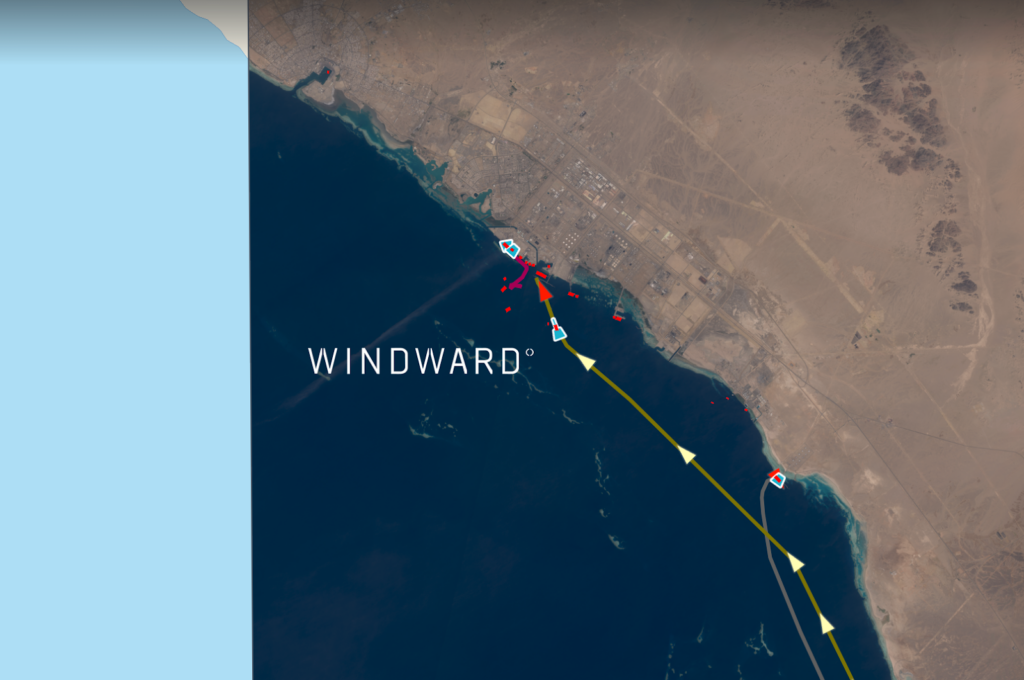
Windward Remote Sensing Intelligence detected four crude tankers at Yanbu on March 4, more than double the pre-crisis single-day peak. This surge indicates that Red Sea export terminals are now operating near maximum berth capacity.
Cargo destinations also shifted dramatically. During the week of March 2, 100% of crude loaded at Saudi Red Sea ports was destined for Egypt, specifically the Suez and SUMED pipeline system.
This indicates that Saudi Arabia is using the Petroline bypass to move crude westward into the Mediterranean through the SUMED pipeline, effectively circumventing the entire Arabian Peninsula and preserving access to global markets without relying on Hormuz.
Saudi Aramco CEO Amin Nasser has warned that a prolonged halt in Strait traffic could have “catastrophic consequences” for the global economy, noting that current global oil inventories are already at five-year lows, leaving limited buffer capacity if disruptions persist.
Iraqi Export Collapse
Iraq has been among the most severely affected producers during the crisis. National oil production has reportedly fallen from approximately 4.3 million barrels per day to around 1.3 million barrels per day, while exports have dropped by at least 800,000 barrels per day.
The decline is primarily linked to the closure of the Al-Basra Offshore Terminal and the inability of tankers to safely navigate the Strait of Hormuz under current security conditions.
UAE
A similar adjustment is underway in the UAE.
Crude exports departing from terminals inside the Gulf declined to 1.63 million barrels per day, compared with a January average of approximately 2.45 million barrels per day.
To maintain export continuity, the UAE has shifted shipments toward the Abu Dhabi Crude Oil Pipeline (ADCOP), which transports crude directly to the Fujairah terminal on the Gulf of Oman.
Fujairah is now handling approximately 1.01 million barrels per day, accounting for roughly 38% of total UAE seaborne crude exports and serving as the primary bypass route around the Strait of Hormuz.
During the week of March 2, approximately 90% of Fujairah cargoes were bound for Singapore, Thailand, and Malaysia, suggesting that Southeast Asian hubs are absorbing redirected Gulf crude volumes.
Asia Energy Market Pressure
Energy supply disruptions in the Gulf are beginning to create broader macroeconomic pressure across Asian energy markets.

Countries including China, Japan, and South Korea rely heavily on Gulf energy exports, with the region supplying a significant share of their seaborne crude imports.
With shipping through the Strait of Hormuz severely constrained, Asian refiners have begun competing more aggressively for alternative supply sources, including U.S. crude and Omani grades.
Shipping disruptions have also affected LNG flows. No LNG tankers have reportedly exited the Strait of Hormuz since the start of the conflict, while damage to Qatar’s main LNG export facility has further reduced supply availability.
The tightening market has pushed Asian buyers to compete more aggressively for available cargoes, contributing to rising freight rates and widening price spreads for both oil and LNG across the region.
The disruption has triggered what market observers describe as an energy panic across parts of Asia. In China in particular, several major refineries have reduced operating capacity or declared force majeure due to feedstock shortages linked to Gulf supply disruptions. As a result, Asian buyers are aggressively seeking replacement cargoes from Africa and Latin America, intensifying global competition for available crude supplies.
Cuba Supply Disruption
Cuba is experiencing a sharp decline in maritime energy supply.
As of March 9, only 11 tankers have called Cuban ports this month, the lowest level recorded in at least twelve months.

Monthly arrivals had already fallen earlier this year, declining from 53 tanker calls in January to 34 in February.

According to Vortexa, no laden or loading tankers are currently reporting Cuba as a destination.
However, Windward tracking indicates possible anomalous activity involving the vessel SEA HORSE (IMO 9262584). The tanker was openly sailing toward Cuba until February 25, after which it appears to have ceased visible reporting while approaching the region. This behavior may indicate potential AIS spoofing or dark activity, though the vessel’s current operational status remains unconfirmed.

Tankers currently present in Cuban ports are primarily owned or managed by companies registered in Panama, China, and Greece.
Container shipping activity is also limited. Only three container vessels currently report Cuba as a destination, originating from China, India, and the Netherlands, with predicted ETAs indicating delays of approximately ten days.
At the same time, 12 U.S. vessels are currently transmitting AIS signals in Cuban waters, primarily classified under military, law enforcement, or other specialized subclasses.
Power shortages across the island have intensified, with outages in Havana and central regions reportedly lasting up to 18 hours per day.
Outlook
The March 10 operating picture shows a maritime environment where suppressed chokepoint traffic, adaptive vessel behavior, rising logistics disruption, and widening energy supply stress are all interacting at the same time.
Hormuz traffic has fallen to the lowest level of the conflict, with only one outbound Iranian-flagged vessel recorded and no inbound commercial traffic observed. Defensive AIS messaging suggests that some operators are adapting signaling behavior under threat, while Bab el-Mandeb, Suez, and Cape flows indicate redistribution rather than normalization.
At the same time, state responses are widening. Pakistan’s naval escort operation shows that governments are beginning to intervene directly in commercial maritime security, while Chinese intelligence assets in the Gulf of Oman reflect expanding strategic monitoring of the conflict environment.
Operational strain is spreading across ports, Gulf producers are adjusting output and export routing, and secondary markets such as Cuba are showing signs of supply stress.
The paralysis of dry bulk flows, the collapse of Iraqi exports, and rising refinery disruptions across Asia indicate that the effects of the crisis are expanding well beyond the Strait itself. Commodity markets, industrial supply chains, and maritime logistics networks are now being affected simultaneously.
Taken together, the maritime crisis is no longer defined only by transit suppression in Hormuz. It is now driving a broader reordering of route choice, tanker deployment, port performance, naval posture, and energy supply risk across multiple regions.
Explore more

One Month of War in the Gulf: Mapping the Global Maritime Disruption
At a Glance The First Month of the Iran War at Sea One month after the launch of Operation Epic Fury, the maritime system is no longer reacting to disruption. It is operating within it. The first days of the conflict triggered an immediate collapse in commercial confidence. Tankers halted, insurance coverage was withdrawn, and...
Read more

March 31, 2026: Iran War Maritime Intelligence Daily
At a Glance Operational Overview Transit through the Strait of Hormuz remains controlled rather than open, but throughput is increasing. On March 30, six AIS-transmitting vessels crossed the corridor, while additional movements likely occurred under partial or fully dark conditions. At the same time, vessel activity at Bandar Abbas provides visibility into how this system...
Read more

March 30, 2026: Iran War Maritime Intelligence Daily
At a Glance Operational Overview Global oil and maritime markets are now facing simultaneous pressure across three critical export nodes. The Strait of Hormuz remains effectively closed under selective IRGC-controlled transit. Ust-Luga has sustained its fifth UAV attack in seven days. Yanbu is operating as the primary alternative outlet for Gulf crude while facing a...
Read more

Week Four of the Iran War: A Maritime Intelligence Breakdown
At a Glance The Fourth Week of the Iran War at Sea Four weeks into the conflict, maritime activity is no longer defined by disruption alone, but by the emergence of a new operating model. The system has not stopped. It has adapted. The Strait of Hormuz is functioning under controlled access rather than open...
Read more

March 29, 2026: Iran War Maritime Intelligence Daily
At a Glance Operational Overview Maritime activity in and around the Strait of Hormuz is entering a more restrictive and unpredictable phase. While vessel movement continues through the Iranian-managed corridor near Larak Island, access is no longer consistent or assured. Approval is increasingly conditional, opaque, and subject to shifting criteria. The clearest signal of this...
Read more