At a Glance What Is the Maritime Gray Zone? The maritime gray zone describes state or state-aligned actions that fall between routine presence and open conflict. These operations are intentionally deniable, often unattributable, and designed to achieve strategic gains without crossing the threshold of armed escalation. Gray-zone maritime activity includes behaviors that look routine on...
At a Glance The Foundation of Truth: Elevating Maritime Intelligence Above the Noise In the global maritime ecosystem, data is the new oil, but “dirty oil” is currently clogging the engines of compliance and national security. For years, the industry has focused on Know Your Customer (KYC) and Windward’s trademarked Know Your Vessel (KYV™). While...
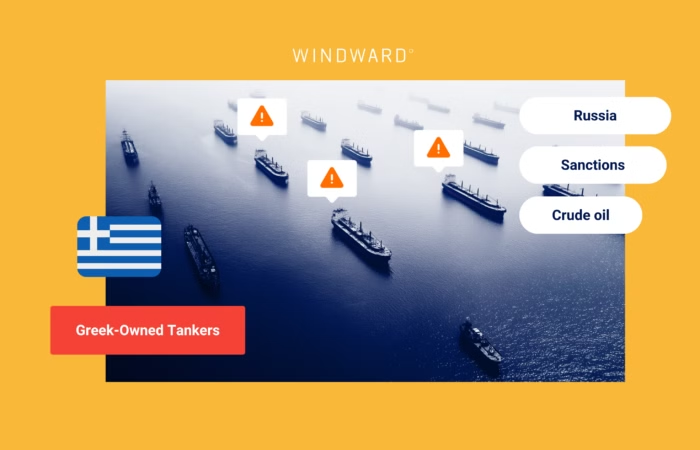
Greece-Owned Tankers Exit Russia Crude Trades Ahead of U.S. Sanctions Deadline
What’s inside?
A Rapid Drop in Greek-Owned Liftings
There’s been a drastic and immediate fall in the number of Greece-owned tankers lifting Russian crude to the lowest level since the invasion of Ukraine, amid widespread disruption ahead of a U.S. sanctions deadline on Rosneft and Lukoil.
Only three of the 65 Russian crude cargoes loaded between November 1 and 16 were on Greek-owned ships, according to preliminary data from Windward and Vortexa.
The sharp shift in fleet composition reflects growing caution in the global market as a U.S. waiver deadline expires on November 21.
The U.S. announced sanctions on October 22 on Rosneft and Lukoil, Russia’s two largest producers, which export more than half of the federation’s seaborne crude, estimated at around 3.6 million bpd.
The U.S. set November 21 as the enforcement start date. The UK announced sanctions on the two producers a week earlier.
A Shift in U.S. Strategy
Sanctions on Russia’s key producers signal a major shift for the Trump administration, which had largely focused on Iranian oil and shipping since inauguration in January. The move to block exports — rather than limit the sale price while keeping flows moving — directly undercuts the core principle of the Oil Price Cap.
Greek-owned tankers have largely underpinned cap-compliant Russian crude shipments since the start of the war, with the remaining volumes handled by a sanctions-circumventing shadow fleet of elderly, poorly maintained vessels operating under permissive flag registries with opaque insurance.
From January through July, when Russia’s Urals grade was priced below the $60/bbl cap, Greece-owned tonnage lawfully shipped as much as 40% of all crude from Russia, alongside sanctioned tankers and others in the shadow fleet.
Regulatory Pressure Reshapes Flows
In August, EU and UK regulators said they were lowering the Oil Price Cap by 15% to $47.60/bbl from September. That pushed much of Russia’s crude above the cap, curbing Greece-owned liftings.
EU-owned tonnage comprised between 16% and 20% of crude shipments from August through October, according to Windward data.
That changed sharply after the U.S. announcement. In the first 16 days of November, EU-owned tonnage shipped less than 5% of crude, while the share carried by sanctioned tankers rose to 75%. In previous months, sanctioned tankers accounted for just over half of all shipments.
At the same time, Urals prices have fallen sharply, slipping below the EU and UK capped price as sellers struggle with uncertainty and shrinking buyer pools. The discount to Brent is reportedly the widest since March 2023.
The EU and UK have blacklisted more than 550 Russia-trading, sanctions-circumventing ships over the past two years.
While Greece-owned tankers have stepped back from crude liftings, they remain active in clean and fuel oil trades, moving nearly a third of volumes in the first half of November. Diesel remains below the $100/bbl cap imposed by the G7 in February 2023.
Previous large-scale sanctions on Russia have disrupted flows before the federation adapted. The Trump administration’s sanctions on more than 160 Russia-trading shadow-fleet tankers in January triggered delays and added logistics inefficiencies while new vessels were sourced.
Everything you need to know about Maritime AI™ directly to your LinkedIn
Ukraine’s Drone War on Dark Fleet Triggers Diplomatic Tensions, Heightens Black Sea Risk
Rising Tensions Over the Tow of Kairos A diplomatic row is brewing between Türkiye and Bulgaria over how and why a tug towed the stricken shadow fleet tanker Kairos into Bulgarian territorial waters five days after it was hit by a Ukrainian drone. Kairos (IMO 9236004) was one of two sanctioned, Russia-trading, shadow fleet tankers...
The New Sanctions Reality: How Multi-Sensor Fusion Detects What Paperwork Hides
At a Glance Sanctions Compliance Has Outgrown Paper Trails Sanctions regimes have become increasingly complex, coordinated, and aggressive. The U.S., EU, and UK now issue frequent updates targeting vessels, companies, sectors, and behaviors, not just obvious bad actors. Yet most sanctions compliance workflows still start from the same two pillars: On their own, these inputs...
Gambia Deletes Shadow Fleet Tankers in Second Flag Governance Crackdown
Gambia Moves to Reassert Control Over Its Flag Gambia’s maritime administration has begun removing most Russia-trading tankers flagged through its privately run ship registry as a broader crackdown on weak governance gains momentum. Twenty tankers are now listed as falsely flagged with Gambia in the International Maritime Organization’s database. The IMO designates a vessel as...
Beyond KYC: Why 2026 Demands Know Your Vessel (KYV™)
At a Glance KYV™ Is No Longer Optional For banks, trade finance teams, and risk officers, customer due diligence has long been the cornerstone of compliance. But the events of this year proved that knowing your customer is no longer enough. The vessels moving your commodities, and the behaviors they exhibit, can quietly expose your...
From Government to Global: How Satellite Intelligence Became a Commercial Advantage
At a Glance From Government Asset to Commercial Advantage Satellite intelligence began as a government-only capability – expensive, classified, and inaccessible to nearly everyone outside national security. Today, it’s a commercial advantage available to traders, insurers, logistics teams, energy operators, and maritime security professionals who need verified visibility across global operations. This shift didn’t happen...