


March 17, 2026
Bulk Carriers Find New Route Out of Hormuz Strait


Bulk Carriers Find New Route Out of Hormuz Strait
What’s inside?
At a Glance
- Bulk carriers sailing eastbound to exit the Middle East Gulf are re-routing through Iranian territorial waters to navigate the Strait of Hormuz, circumventing shorter, normal international navigation channels.
- Windward tracked at least five ships using this Iranian waters route over March 15 and 16.
- Traffic through the Strait of Hormuz — the waterway for 20% of the world’s oil and gas — is down by approximately 97%.
- The new route, which allows allies and supporters to transit, illustrates how Iran’s selective blockade has evolved.
- The bulk carriers tracked eastbound through the strait had, in nearly all cases, previously called at Imam Khomeini port in Iran.
Re-Routing Through Iranian Territorial Waters
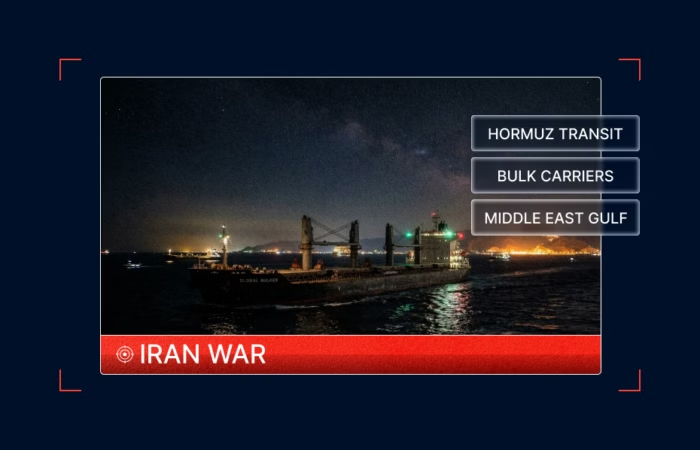
Bulk carriers sailing eastbound to exit the Middle East Gulf are seen re-routing through Iranian waters over the past 48 hours as they navigate through the Strait of Hormuz, one of the first signs of a workaround in the region.
Windward tracked at least five ships over March 15 and 16 leaving via a route that takes ships well within Iran’s territorial waters, circumventing shorter, normal international navigation channels.

Source: Windward Maritime AI™ Platform
There’s intense scrutiny around the number of transits via the Strait of Hormuz as the international waterway through which 20% of the world’s oil and gas remains effectively shut to shipping. Traffic is down around 97%.
Yet limited traffic is emerging, including evidence that vessels are sailing via longer routes through the Hormuz strait as they leave the Middle East Gulf.
In nearly all cases these bulk carriers, and others, that have been tracked eastbound through the Strait of Hormuz have previously called at Imam Khomeini port in Iran, one of the Islamic Republic’s key commercial ports.
The tracking augments rising evidence that Iran is exerting permission-based transit and control of the strait as the war extends into its third week, with its effective closure roiling the global economy.

Source: Windward Maritime AI™ Platform
The new route illustrates how Iran’s selective blockade has evolved to allow allies and supporters to transit. In addition to bulk carriers, two liquefied petroleum gas carriers have sailed through in the past 36 hours. Their route wasn’t immediately apparent as GPS jamming obscured the tankers’ trajectory via AIS.
Eight ships, excluding Iranian flagged vessels, were tracked through the strait with their AIS on March 16, nearly double numbers seen earlier this week.
Explore more

March 16, 2026: Iran War Maritime Intelligence Daily
At a Glance Operational Overview Maritime activity across the Gulf and adjacent shipping systems remained heavily disrupted on March 15 as the conflict continued to distort commercial traffic patterns, energy flows, and maritime security conditions. Transit through the Strait of Hormuz remained near paralysis, with only three outbound vessels recorded and no inbound crossings. While...
Read more

March 15, 2026: Iran War Maritime Intelligence Daily
At a Glance Operational Overview Maritime activity across the Gulf maritime and energy system remained highly unstable on March 14 as the conflict entered its third week. Commercial transit through the Strait of Hormuz fell to a new low, with no AIS-confirmed vessel crossings recorded in either direction. The development marks the first visible halt...
Read more

Two Weeks Into the Iran War: A Maritime Intelligence Breakdown
At a Glance The Second Week of the Iran War at Sea Two weeks after the launch of Operation Epic Fury, the maritime conflict in the Gulf has shifted from immediate disruption to sustained systemic stress across global shipping networks. The initial days of the conflict triggered a rapid collapse in commercial confidence in the...
Read more

March 12, 2026: Iran War Maritime Intelligence Daily
At a Glance Operational Overview Maritime security conditions across the Gulf deteriorated further on March 11 as multiple coordinated attacks targeted commercial vessels across several operating environments, including open transit corridors, anchorage zones, and ship-to-ship transfer areas linked to regional oil exports. Commercial vessel activity through the Strait of Hormuz remains extremely limited. Only two...
Read more