


August 12, 2026
Three Kinetic Incidents in One Window as the Iran-Oman Corridor Expands


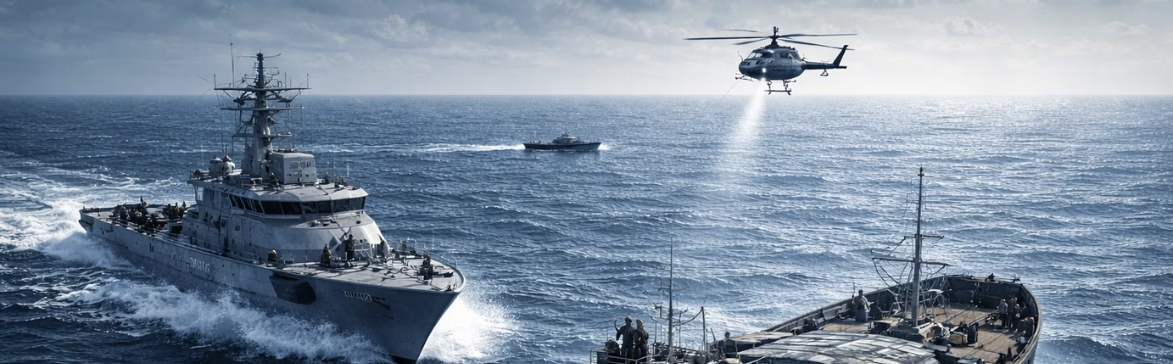
Maritime Interdiction
What Is a Maritime Interdiction?
Maritime interdiction is an enforcement activity used by navies, coast guards, and maritime authorities to intercept, inspect, divert, or seize vessels suspected of illegal, sanctioned, or hostile activity. Unlike general patrolling, maritime interdiction is a targeted operation often involving Visit, Board, Search, and Seizure (VBSS) tactics. It serves as the primary mechanism for disrupting the flow of contraband interdiction, enforcing international sanctions, and securing maritime borders against non-state actors or hostile entities.
In the modern maritime landscape, interdiction has evolved from random boardings to high-precision, intelligence-led maneuvers. By utilizing maritime enforcement data, including behavioral analytics and multi-source fusion, authorities can identify high-risk targets such as members of the shadow fleet or vessels engaged in deceptive shipping practices. This ensures that assets are deployed efficiently, reducing the friction for legitimate trade while maintaining a decision advantage over illicit actors.
Key Takeaways
- Maritime interdiction serves as the tactical mechanism for navies and coast guards to stop, inspect, and seize vessels suspected of illicit activity or sanctions evasion.
- Success in modern enforcement relies on Visit, Board, Search, and Seizure (VBSS) tactics to physically validate cargo and vessel identity in contested waters.
- Authorities increasingly prioritize naval interdiction of the shadow fleet, targeting ghost ships that use deceptive shipping practices to bypass global trade restrictions.
- Effective maritime enforcement depends on the ability to prioritize targets using data-driven risk scoring to ensure that assets are deployed against the highest-probability threats.
- Commercial vessels operating in high-risk corridors face elevated scrutiny, where a single interdiction can lead to significant voyage delays, insurance complications, and legal exposure.
Naval Security and the Tactical Enforcement of Maritime Interdiction
For defense and national security organizations, maritime interdiction operations (MIO) are the primary means of projecting authority and enforcing international law at sea. These operations are not random; they are precision-guided missions designed to disrupt the flow of contraband interdiction, including illegal narcotics, weapons, and sanctioned energy products. By utilizing specialized VBSS teams, maritime authorities can physically assert control over a vessel to verify its pattern of life and cargo integrity.
In practice, this is a multi-layered effort. In late 2025 and early 2026, the U.S. Coast Guard and military executed a concentrated campaign of maritime interdictions targeting tankers linked to Venezuelan sanctions evasion. A high-profile example was the seizure of the tanker Skipper off the Venezuelan coast under a judicial warrant. This action, part of a broader enforcement campaign involving both interdictions and blockades, highlights how tactical seizures are used to disrupt illicit revenue streams and force geopolitical compliance.

Core Components of Maritime Interdiction
| Component | Operational Role | Strategic Outcome |
| VBSS Teams | Specialized units trained for boarding and tactical control. | Safe and secure inspection of non-cooperative vessels. |
| Intelligence Fusion | Correlating AIS, satellite, and behavioral risk rivals. | High-confidence targeting to reduce false positives at sea. |
| Judicial Framework | Warrants, sanctions lists, and international maritime law. | Legal authority for seizures and vessel forfeiture. |
By aligning tactical VBSS capabilities with high-fidelity maritime intelligence, governments can transform a vast ocean into a monitored environment where illicit actors can no longer operate with impunity.
What is maritime interdiction, and when is it legally authorized?
Maritime interdiction is the proactive exercise of a state’s authority to intercept and inspect vessels to ensure compliance with international law and national security mandates. It is legally triggered by several frameworks, including UN Security Council resolutions, the right of visit under the Law of the Sea (UNCLOS), or through domestic judicial warrants and executive orders.
How do maritime interdiction operations identify which vessels to stop or board?
Authorities use maritime intelligence to identify vessels with suspicious histories, such as those associated with the shadow fleet, dark activity, or complex changes in ownership that signal an intent to hide illicit cargo.
What intelligence sources are most critical to successful maritime interdiction?
Successful naval interdiction depends on multi-source intelligence that goes beyond self-reported data. The most critical framework involves fusing Remote Sensing Intelligence with predictive intelligence and behavioral analytics to identify anomalies. By correlating AIS with multiple sources of intelligence, authorities are able to track illicit behaviors, vessels, and networks, allowing them to move from wide-area surveillance to a tactical VBSS boarding with a high-confidence truth layer that identifies illicit activity before it reaches a border.
Managing Commercial Exposure and Voyage Risk in Interdiction Zones
For commercial shipping and trading organizations, maritime interdiction represents a direct operational and compliance risk. Even when companies are not knowingly engaged in illicit activity, their vessels may be delayed, boarded, or denied passage due to suspicious cargo indicators, complex ownership structures, or accidental exposure to sanctions through a counterparty.
An interdiction event can immediately derail a voyage, leading to significant delays that impact delivery windows and bunkering costs. Beyond the physical delay, being subject to maritime enforcement actions can trigger “frustration of contract” and lead to a withdrawal of insurance coverage if a vessel is suspected of assisting the shadow fleet. Commercial organizations must maintain rigorous protocols to ensure they are not inadvertently facilitating the trade of sanctioned commodities or engaging in ship-to-ship transfers that could lead to sanctions violations and subsequent asset forfeiture.
Commercial Impact of Maritime Interdiction
| Operational Area | Primary Risk | Financial Impact |
| Voyage Execution | Physical boarding and inspection delays. | Increased demurrage fees and missed delivery slots. |
| Sanctions Compliance | Direct or indirect linkage to sanctions evasion. | Heavy regulatory fines, loss of banking access, and cargo seizure. |
| Contractual | “Frustration of contract: or force majeure claims. | Protracted legal disputes between owners and charterers. |
Why are commercial vessels sometimes subject to maritime interdiction?
Vessels are often stopped based on “risk signals” rather than confirmed guilt. If a ship’s routing, ownership history, or cargo patterns align with known deceptive shipping practices used by the shadow fleet to bypass sanctions, it may be boarded for a VBSS inspection to verify the legality of the cargo and its origin.
How does maritime interdiction affect voyage timelines, insurance, and contracts?
A single boarding can cause delays ranging from hours to days, potentially resulting in missed port windows and significant demurrage fees. Furthermore, the mere fact of being interdicted can lead underwriters to reassess the vessel’s risk profile, potentially spiking war-risk premiums or triggering clauses that void insurance if sanctions violations are uncovered.
What steps can shipping companies take to reduce interdiction risk?
Proactive risk management is essential. Shipping companies should utilize maritime intelligence and behavioral analytics to vet their entire supply chain, ensuring they avoid exposure to sanctions and that their vessels maintain a clean operational history that does not trigger the red flags used by maritime enforcement agencies.
Data-Driven Visibility for Interdiction and Compliance
From a technology perspective, maritime interdiction depends on timely, reliable intelligence to prioritize targets and reduce false positives at sea. Effective awareness requires moving beyond manual spotting to automated systems that correlate vessel behavior, identity, cargo indicators, and contextual risk signals before assets are ever deployed.
Reliance on a single data source is a significant vulnerability during an enforcement mission. For instance, AIS data alone is insufficient because non-compliant vessels frequently engage in dark activity or GNSS manipulation to mask their presence from maritime enforcement agencies. Sophisticated monitoring requires a multi-layered approach to ensure that high-stakes VBSS resources are focused on the targets most likely to be carrying contraband or violating sanctions or international law.
How does data-driven risk scoring support maritime interdiction decisions?
Data-driven risk scoring allows agencies and compliance officers to triage thousands of vessels simultaneously, assigning a priority level based on sanctions history, deceptive shipping practices, and ownership links. This ensures that assets are deployed against the highest-probability threats while minimizing friction for legitimate trade.
Why is AIS data alone insufficient for maritime interdiction targeting?
AIS is a cooperative system that is easily manipulated through spoofing or going dark. For naval interdiction, AIS only provides the “reported” story; without independent verification and behavioral analytics to validate that data, authorities cannot identify the shadow fleet or other non-cooperative vessels attempting to evade detection.
How do multi-source intelligence and behavioral analytics improve interdiction accuracy?
Successful naval interdiction depends on multi-source intelligence that goes beyond self-reported data. The most critical framework involves fusing remote sensing intelligence with predictive intelligence and behavioral analytics to identify anomalies. By correlating AIS with multiple sources of intelligence, authorities are able to track illicit behaviors, vessels, and networks, allowing them to move from wide-area surveillance to a tactical VBSS boarding with a high-confidence truth layer that identifies illicit activity before it reaches a border.
Strengthening Global Security and Commercial Compliance Through Maritiem AI™
Windward’s Maritime AI™ platform provides the critical visibility and decision advantage necessary to execute or navigate maritime interdiction operations. For government and defense organizations, our Early Detection models surface vessels exhibiting deceptive shipping practices, such as GNSS manipulation or dark activity, allowing agencies to prioritize VBSS assets for the highest-risk targets, which can then be validated by Remote Sensing Intelligence.
Windward’s Visual Link Analysis reduces investigative blind spots by uncovering hidden relationships and ownership networks that aren’t visible in standard due diligence. By mapping ownership webs up to seven layers deep, VLA identifies sister vessels and shared corporate nesting that link seemingly innocent ships to sanctioned entities. This capability is essential for both government investigators tracing illicit networks and commercial compliance teams vetting their supply chains against global sanctions.

To streamline these complex investigations, MAI Expert™ acts as a virtual subject matter expert, providing Gen AI-powered explanations of flagged behaviors. Whether it is summarizing a vessel’s risk profile or explaining why a specific network connection triggers a red flag, MAI Expert™ delivers actionable, explainable insights that support faster, defensible decisions in contested waters. By fusing behavioral analytics with multi-source intelligence, Windward ensures that both public and private sector stakeholders can manage interdiction risks and strengthen their enforcement and compliance workflows within a single, unified platform.
Book a demo to see how Windward’s intelligence can strengthen your maritime interdiction and compliance workflows.
Explore more

The Suez Canal
What Is the Suez Canal? The Suez Canal is a 193-kilometer (120-mile) artificial waterway in Egypt that connects the Mediterranean Sea at Port Said to the Red Sea at Suez, providing the only direct maritime route between Europe and Asia without circumnavigating Africa. The canal runs north-to-south across the Isthmus of Suez, crossing several natural...
Read more

Barnacles
What Are Barnacles? Barnacles are small marine crustaceans that permanently cement themselves to hard surfaces underwater, including the hulls, propellers, and sea chests of ships. Once attached, they form rough, calcified colonies that disrupt the smooth flow of water along a vessel’s hull, increasing hydrodynamic drag and forcing the engine to burn more fuel to...
Read more

EMCON (Emissions Control)
What Is EMCON? EMCON, short for emissions control, is the naval discipline of deliberately silencing or restricting a ship, submarine, aircraft, or task force’s electromagnetic emissions to avoid detection. Under EMCON, units shut down or limit radar, radio, AIS, IFF, and other emitters while still receiving outside signals, turning a vessel that is physically present...
Read more

Decision Intelligence
What Is Decision Intelligence? Decision intelligence is the discipline of combining data, analytics, and artificial intelligence to support better human decision-making in complex, high-stakes environments. It goes beyond traditional business intelligence — which focuses on reporting what has happened — by modeling causes, predicting outcomes, and recommending actions, while keeping the human decision-maker in the...
Read more

Territorial Waters
What Are Territorial Waters? Territorial waters are the belt of sea extending up to 12 nautical miles from a coastal state’s baseline, over which that state exercises sovereignty subject to the rules of international law. Within this zone, the coastal state has full legal authority over the water, seabed, subsoil, and airspace above, with the...
Read more